
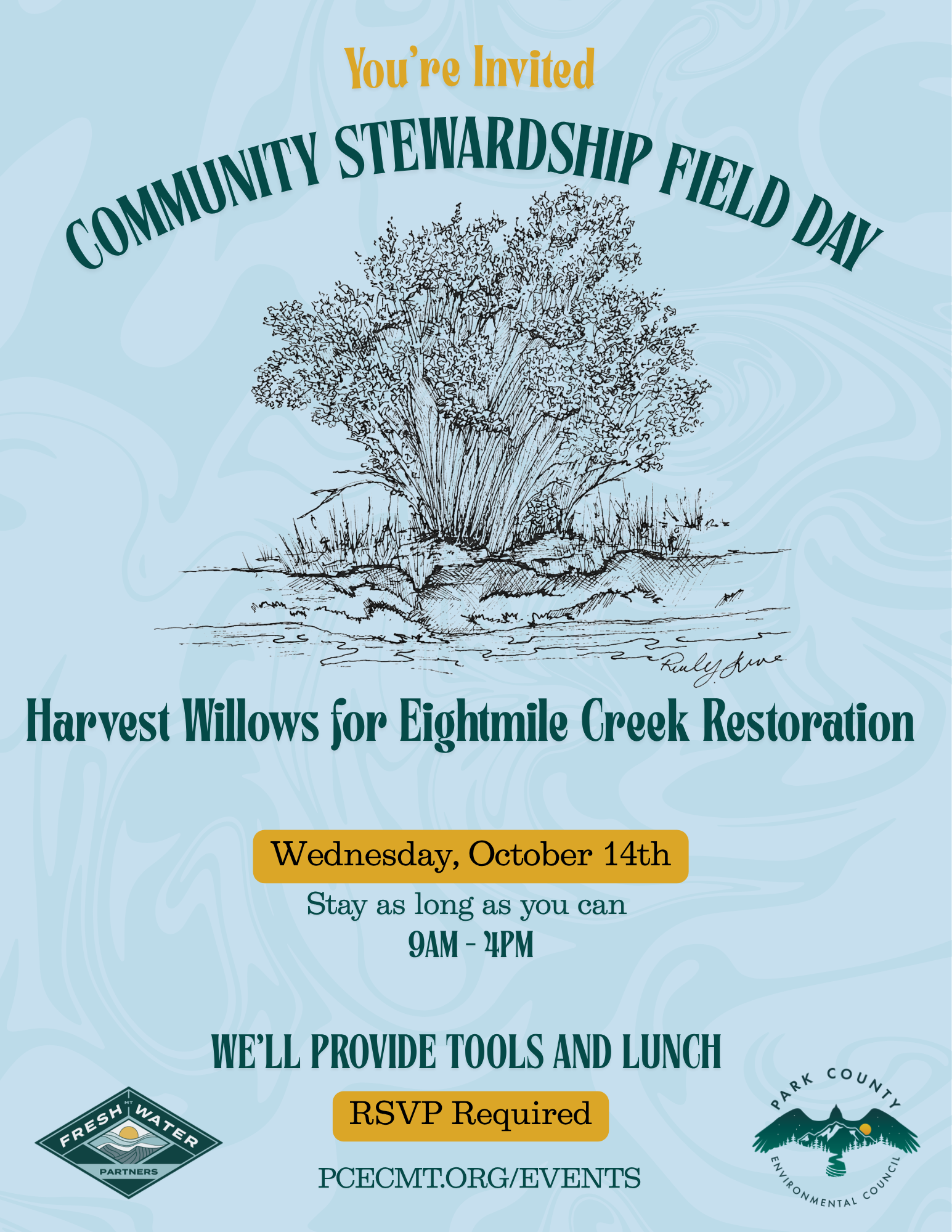
We're teaming up with Montana Freshwater Partners (MFP) to host a Community Stewardship Field Day, and we'd love for you to join us. Volunteers will harvest willow cuttings for MFP's Eightmile Creek restoration project.
Day at a glance
What: Harvest willow cuttings for Eightmile Creek restoration and learn about local conservation work in Park County.
When: Wednesday, October 14th, 9am-4pm. Stay for the whole day or leave early if you need to.
Where: We'll meet at 9am at the Lincoln School (215 E Lewis St, Livingston, MT) and carpool to the harvest site.
Provided: Tools, a short safety and technique briefing, and lunch for everyone who RSVPs.
RSVP here by October 8th so we have an accurate headcount for lunch and tools.
What you'll do and learn
The field day will combine hands-on stewardship with conservation education. We’ll spend the day harvesting willows and gather for a Lunch & Learn, sharing a meal and swapping stories about caring for Park County’s wild habitat. Throughout the day, we’ll learn about MFP’s Eightmile Creek restoration project, private land stewardship, habitat enhancement, fish passageways, and the restoration superpowers of willows.
The work involves walking on uneven terrain and moderate physical activity. There will be tasks for a range of abilities and plenty of breaks, and you’re welcome to head out early if you need to. We'll be out rain or shine, so please come prepared and dress in layers.
What to bring
Sturdy closed-toe shoes or boots (the ground may be wet or muddy)
Work gloves (a few extra pairs will be available)
Loppers, if you have a favorite pair (we'll have plenty to share)
A water bottle and snacks
Please register by October 8th so we have an accurate headcount for lunch and tools. You're welcome to stay for as much of the day as you can. Feel free to bring friends or family who’d like to help. Just be sure everyone registers.
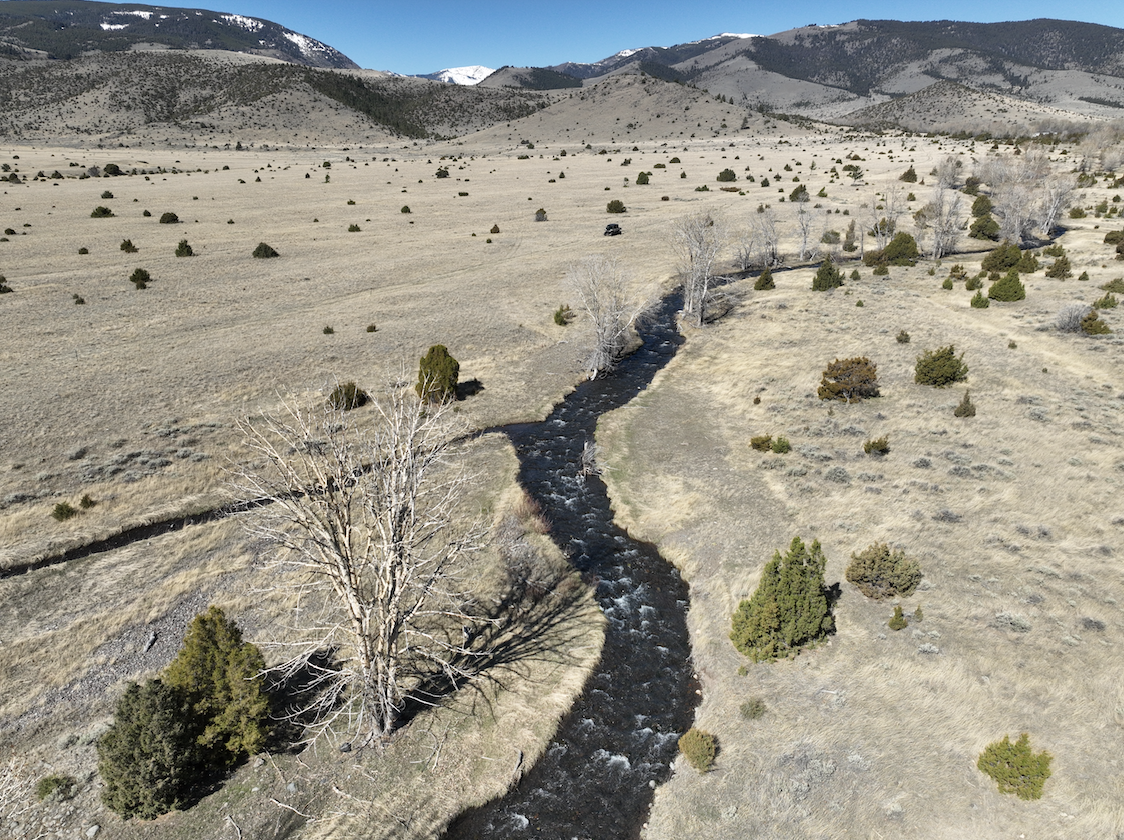
Aerial view of Eightmile Creek
Eightmile Creek is a direct tributary to the Yellowstone River and has been degraded by a long history of overgrazing and dewatering. The restoration project aims to enhance stream and riparian habitat to revive ecosystem health and diversity.
Willows are some of the hardest-working plants in stream restoration. These water-loving plants are natural engineers and play a vital role in healing wetland ecosystems. Once planted along the streambank, the cuttings take root quickly, helping stabilize soil, reduce erosion, shade the stream, and create habitat for fish and wildlife.
Thank you for helping care for our watershed. We hope to see you there!