Community Conversation Next Wednesday: Understanding the 2026 Snowpack Paradox
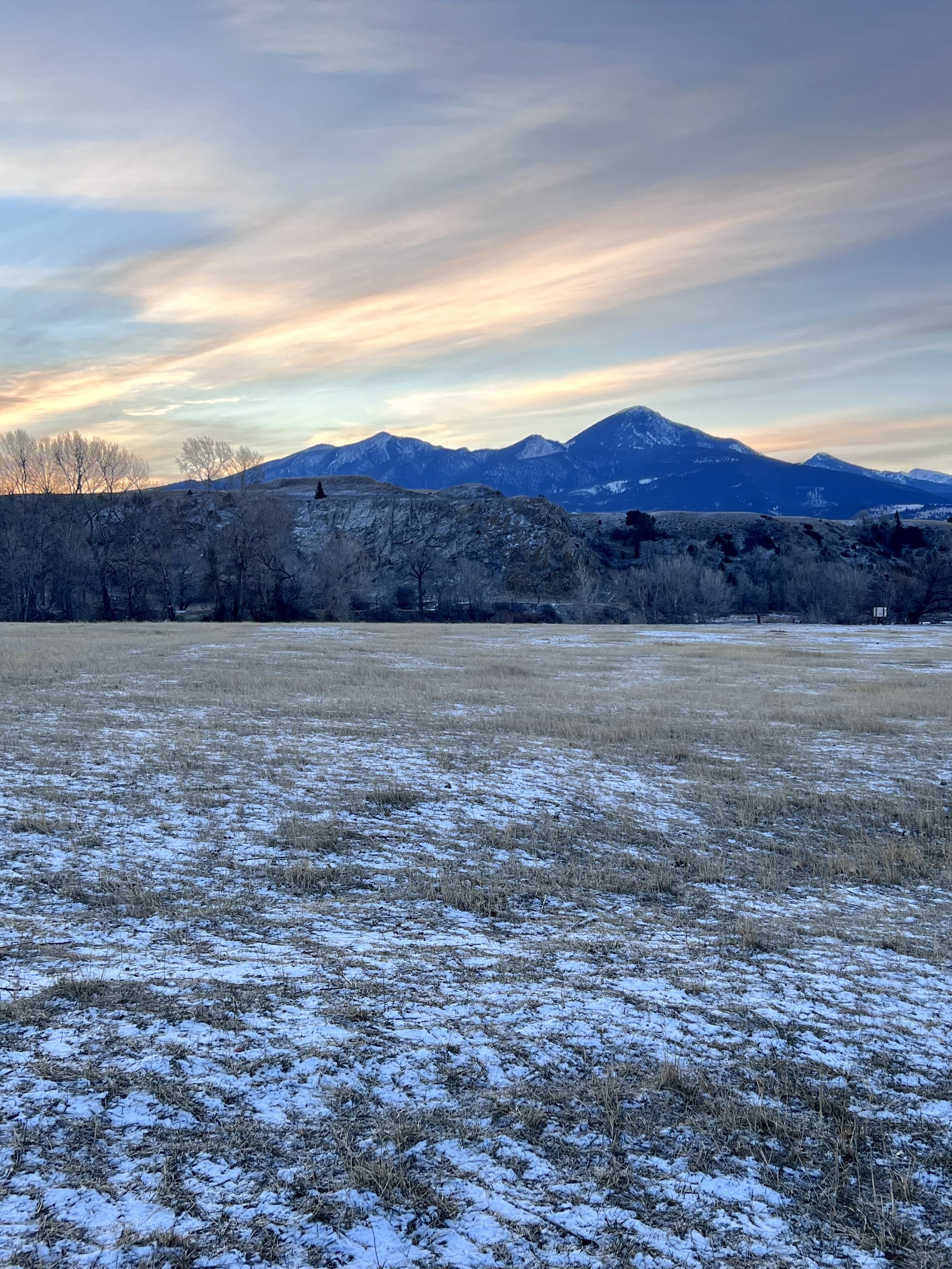
Livingston sunrise Jan. 21, 2026, looking towards Livingston Peak
A conversation I find myself having most days, is how odd this winter feels. The lack of snow, warm temps and watching plants continue to grow in January. Our communities, wildlife and healthy ecosystems depend on an annual snowpack, it is a bulwark against drought, flooding, and wildfire. We depend on the snow for recharging the water table and consistent river flows; it underpins a healthy Yellowstone Cutthroat Trout population and provides clean drinking water for us and all other species.
If you look out your window today in Livingston, Gardiner, or the Shields Valley, the latest snowpack reports might be confusing.
While our valley floors are bare and we continue to see record-breaking warm temperatures, the data tells a different story. In the high alpine areas, as of today, the Upper Yellowstone watershed sits at a surprising 107% of normal Snow Water Equivalent (SWE).
To help us understand this perceived "snowpack paradox" and what it means for the health of our watershed, please join us for an online community conversation.
Community Conversation: Understanding the 2026 Snowpack Paradox
Date: Wednesday, January 28, 2026
Time: 12:00 PM – 1:00 PM (MDT)
Location: On-line register for zoom below
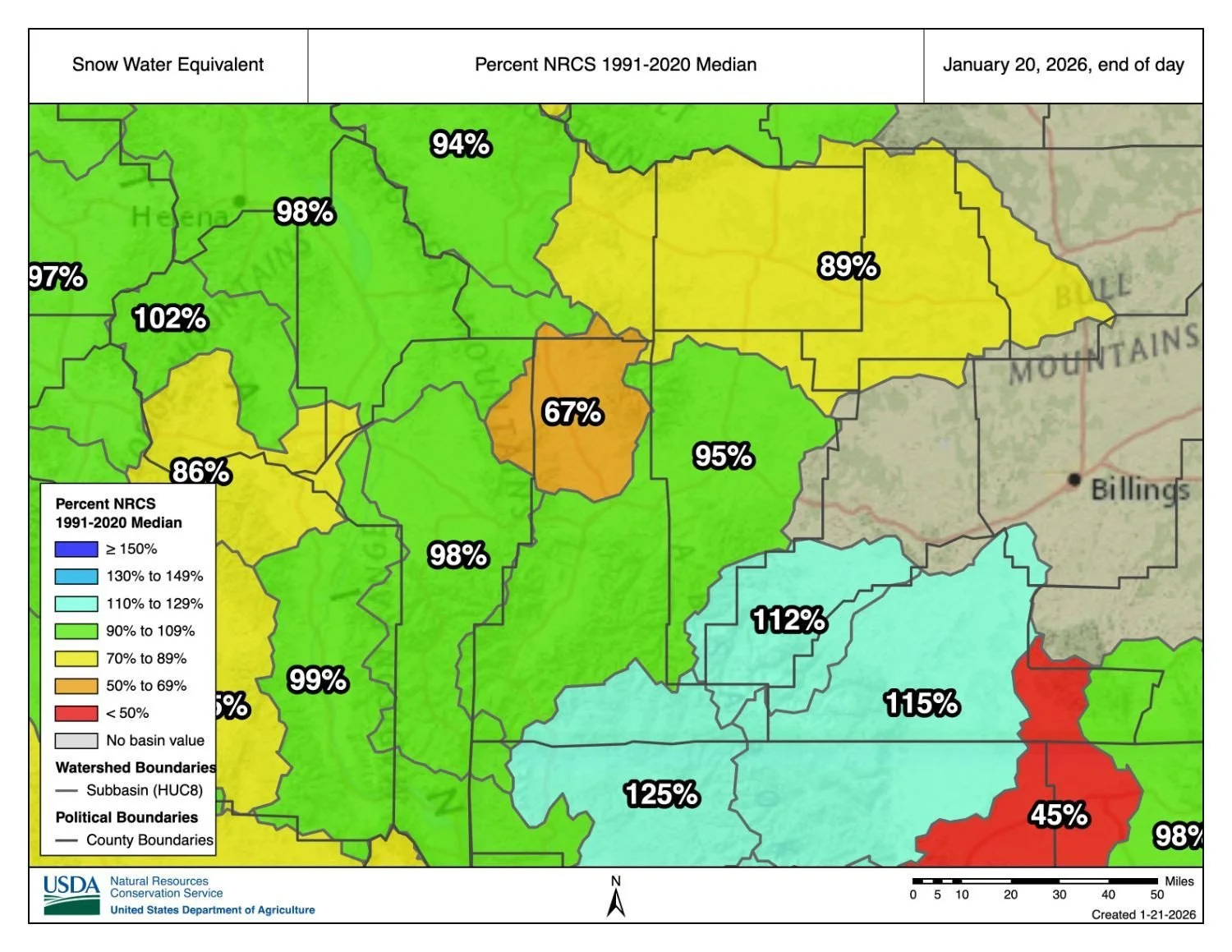
Subbasin snowpack median percentage breakdown. The Upper Yellowstone Watershed as a whole is reporting at 107% of normal. However, the Shields Valley subbasin is more representative of the lack of snow in our backyards at 67%.
Our Featured Guests
Eric Larson, NRCS Water Supply Specialist Eric will provide a deep-dive into the current data. He will explain why high-mountain SNOTEL sites are recording a surplus despite the snow-drought we see in town. We’ll look at the impact of our record-breaking December precipitation and what that 107% figure represents.
Dr. Cathy Whitlock, Regents Professor Emerita, Montana State University As the co-lead author of the 2021 Greater Yellowstone Climate Assessment, Dr. Whitlock will help us zoom out to the big picture. She will discuss the long-term trends of warm-winter snowpacks, the increasing shift from snow to rain, and what these mid-winter thaws mean for the future of the Greater Yellowstone Ecosystem.
At PCEC, we believe that a resilient community is an informed one. As we navigate a changing climate, understanding the nuances of our water supply is more important than ever. Participants will also learn how to navigate and the Natural Resource Conservation Service (NRCS) National Water and Climate Center Interactive map to view snow and precipitation forecasts.
We hope you can join us for this timely discussion.
Upcoming PCEC Events
Help Grow the Livingston's Urban Forest
We are gearing up for the 2026 planting season in May. You can help by signing up to adopt a tree, donating to the tree fund, or signing up to volunteer. Learn more about Livingston Loves Trees program here.
1. Apply to Adopt a Tree
If you have an empty spot on your boulevard or in a public space near your home, PCEC will plant a large, high-quality deciduous tree for you for free—a $750 value to purchase, dig, plant, and secure.
Your Commitment: You must agree to follow a watering schedule and care for the tree. This cost share helps keep our trees free!
Coordinate with Tree Team: work with volunteers on a planting location, date, and the City permit process.
Eligibility: Must reside in the City of Livingston with adequate space for a tree.
2. Donate to the Tree Fund "Plant it Forward"
Help us fund the next 50 trees!
Tree Partner – $50-$100: Help grow our tree fund and increase education and outreach.
Tree Supporter – $250: Purchases a large diameter 1.5-2" tree ($250-$350).
Tree Sponsor – $500: Purchase a large ball-and-burlap tree, City tree permit application and planting costs.
Plant It Forward – $750: All of the above including volunteer and program coordination.
Legacy Tree Steward – $1,000: All of the above including long-term health monitoring, reporting, inventory data collection and adaptive care for five years.
Since 2021, Livingston Loves Trees has been working to improve the equity and resiliency of our local canopy. Our goal is ambitious: to plant 1,000 trees, and we have planted 381 so far. Currently, nearly half of Livingston’s 4,000 public trees are ash. With the emerald ash borer threatening ash trees across the country, it is vital that we diversify our forests now with hardy maples, oaks, elms, and more.
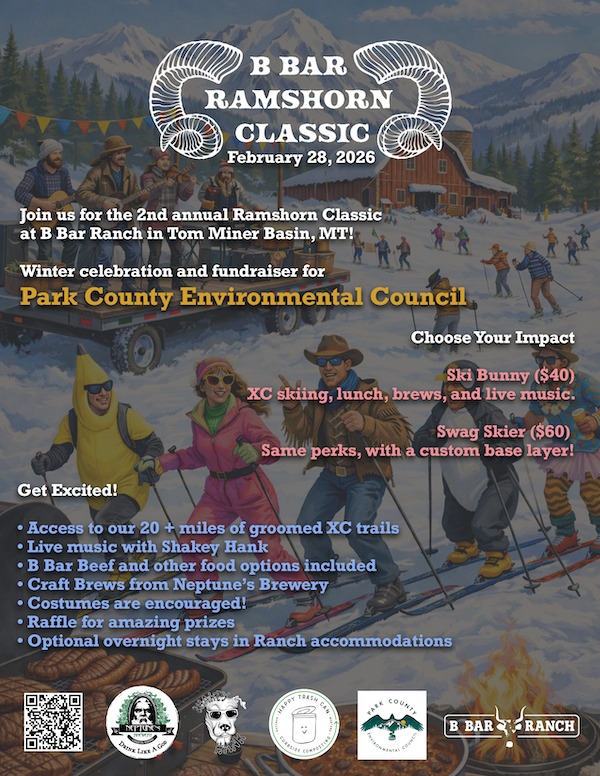
Snow or mud, the Rams Horn party will kick off regardless! We won’t let your epic costume crafting go to waste, so grab your tickets (limited amount available), bring your dancing shoes, and help us turn this 'snowpack paradox' into a celebration of this beautiful place!