Four Years Later: The Power of Water and Community
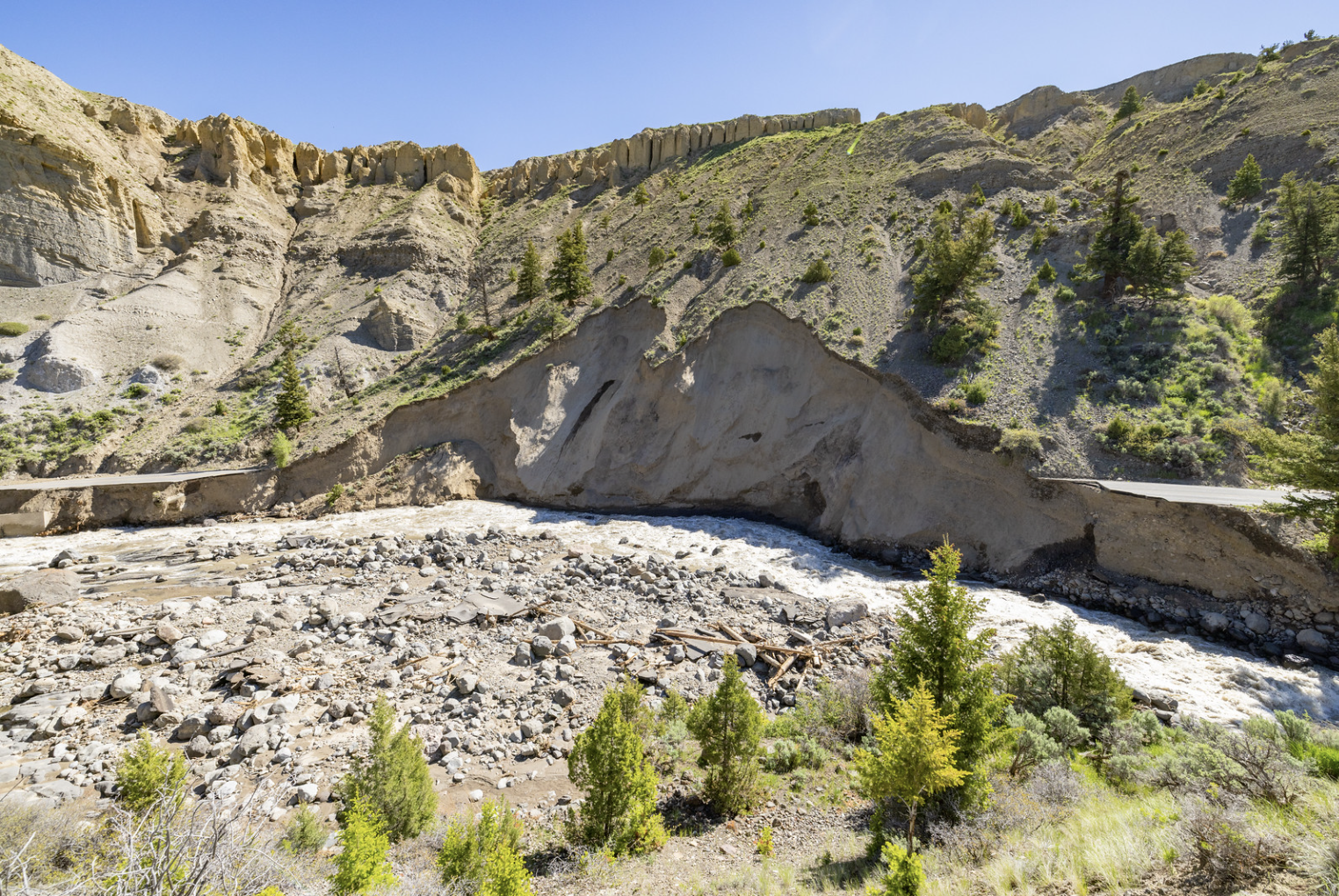
North Entrance Road washout Photo Courtesy of NPS / Jacob W. Frank
Four years ago, on June 13, 2022, people across Park County woke up to a rainy day that seemed like any other. The ordinary feeling of the day quickly went away when all of our morning routines were interrupted with urgent messages and social media posts alerting the community of a rapidly developing flood event on the upper reaches of the Yellowstone River. In less than 24 hours our understanding of the power the river possesses was completely rewritten.
The Upper Yellowstone flood reshaped everything—our roads, our landscape, and our sense of what's possible. Four years have passed since our community was shocked by this extraordinary flood. The waters have receded, the mud has been washed off the walls, infrastructure has been rebuilt, but the impacts and trauma from the flood are still fresh. It’s a rare opportunity that we get to gather, reflect on, and heal from these shared moments.
With a focus on remembrance and resilience, Park County Environmental Council (PCEC) partnered with local residents and the Gardiner High School to host a film screening and community conversation. Gardiner residents and Park County community members packed into the auditorium to watch the community-centered documentary One in Five Hundred by Hugo Sindelar. The film captures the flood’s devastating effect on Yellowstone National Park and surrounding gateway communities: Gardiner, Red Lodge, and Cooke City-Silver Gate. This was the first showing of the film in Gardiner–a community heavily featured in the film. By giving voice to those who lived through the flood, the film humanized what economic hardship, disrupted livelihoods, and recovery actually look like after disaster strikes.
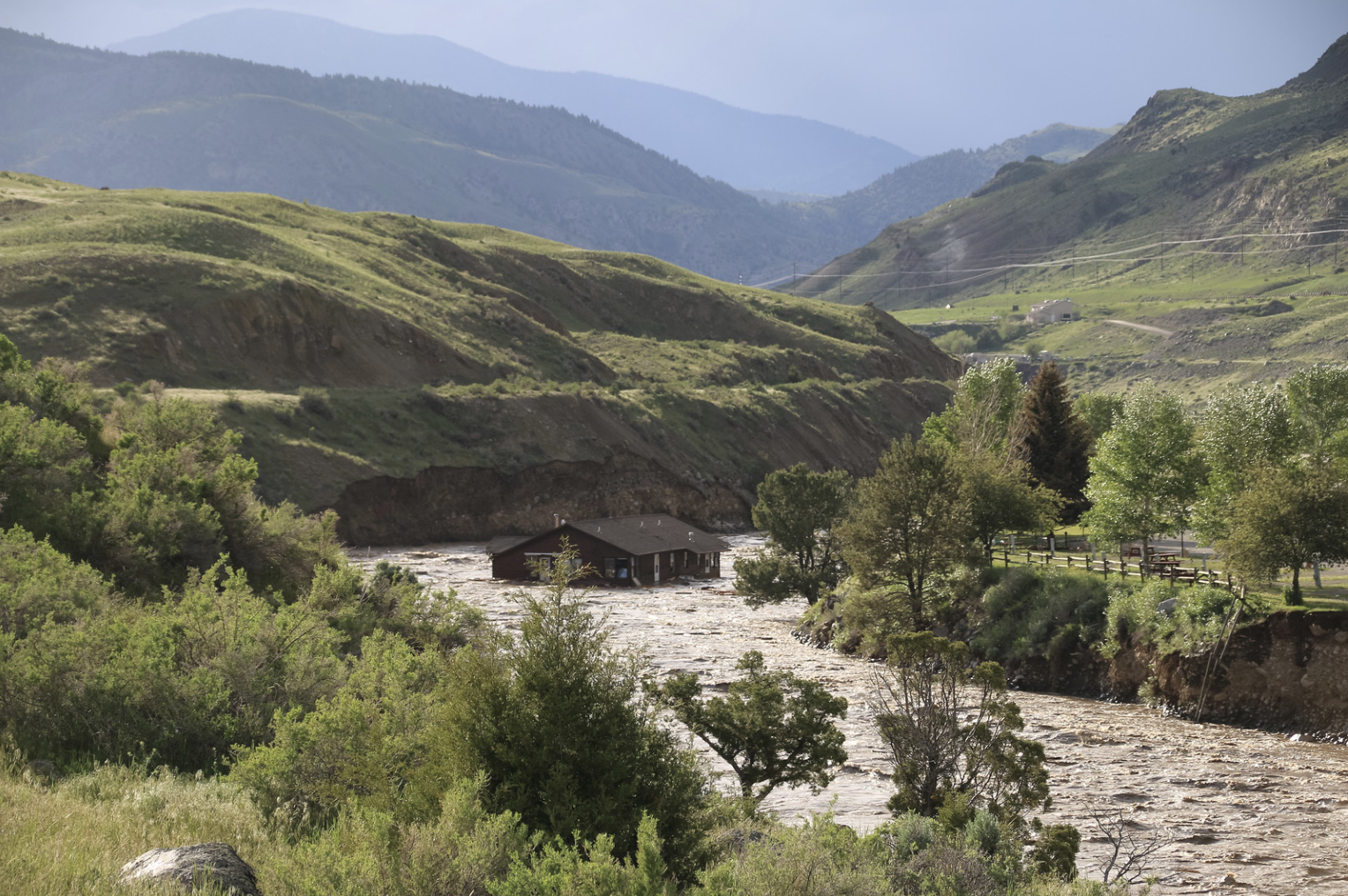
Employee housing in Yellowstone River Photo Courtesy of Gina Riquier
After the screening, we engaged in a community conversation moderated by Bill Berg (Gardiner Resident and Former Park County Commissioner), along with Cam Sholly (Yellowstone National Park Superintendent), Stacey Joy (Owner and Operator of Wonderland Cafe & Lodge), Wendy Weaver (Montana Freshwater Partners Executive Director) and Colter Lumley (Gardiner High School Senior). The evening created a space for neighbors to tell stories through shared experience, to check in with each other, and discuss how we can better prepare for the next flood.
Sarah Stands, PCEC Community Resiliency Director, spearheaded the event and kicked off the evening sharing a bit about her experience with the flood and her work in flood resilience. “While our experience [in Livingston] with the 2022 flood was significant, it's worth acknowledging that it was very different here in Gardiner,” Stands said. “In Livingston, we watched the water rise, and in Gardiner, you were cut off from the world…for a gateway community, it's not just an inconvenience, it's an existential moment.” Gardiner endured an isolation and direct hit that was truly unique. The way this community showed up for each other was nothing short of remarkable.
Recovery and resilience isn't a moment that has passed; it's a movement that continues each day. Stands then framed the evening around a set of questions: “How do we move from surviving a wild river to thriving alongside it? How do we turn new technical data into real world protection for our homes and businesses? What values do we continue to uphold, and what resources do we continue to build to be better prepared for the next one?” These questions have no simple answers, but they are crucial to the conversations that move resilience work forward. Stands went on to articulate that we all know it’s not if another flood will occur, it’s when.
Before showing the film, Stands passed the microphone to Lumley who took the stage to share his oral history of the flood. His story began at 4:00am on June 13th, when he and a friend headed out to work at a ranch in the valley. What appeared to be a normal morning completely changed as they drove into the canyon and encountered so much water they thought they'd driven into the river. “We had no clue what was happening,” Lumley said, “It was a scary time for all of us.”
Faced with the churning water, they reversed course and returned to Gardiner. Lumley and his Boy Scout troop helped set up an emergency soup stand at the Forest Service Office. They provided community members access to water and free food throughout the crisis. Later on, he and his friend went to flooding homes alongside the river and helped evacuate people. They also helped ranchers move their wheel lines to get animals out of the standing water. “It was bizarre to be in the situation,” said Lumley. “[A flood] can happen in an instant and it did.”
Lumley’s words carried the room back to that day–a perfect lead-in to the pouring rain in the opening scene of One in Five Hundred. Over the course of three days a large-scale atmospheric river precipitation pattern brought upwards of five inches of rainfall to the Northern Range of Yellowstone. This rainfall compounded with two to five inches of snow melt equivalent triggered flooding of historic proportions. The rushing river peaked at roughly 54,000 cubic feet per second (cfs), over four times the average peak of 12,000 cfs. The magnitude of the flood is so rare it carries just a 0.2% chance of occurring in any given year or once every 500 years. Yet, shifting climate patterns are rewriting these odds. As snowfall gives way to rain, the collision of rain on snowpack—one of the most reliable triggers for catastrophic flooding—is growing more frequent.
One in Five Hundred
The film unpacked the catastrophic weather event capturing the economic strain on local residents and the climate-resilience that emerged in the aftermath. Startling footage paired with community members sharing what happened and how they have worked to recover was a powerful reminder of the flood’s impact. The force of the water washed away homes, destroyed bridges and roads–including the main road to the north entrance of Yellowstone National Park. The Park was forced to close, cutting surrounding gateway towns off from their livelihoods. The aftermath was a financial tsunami.
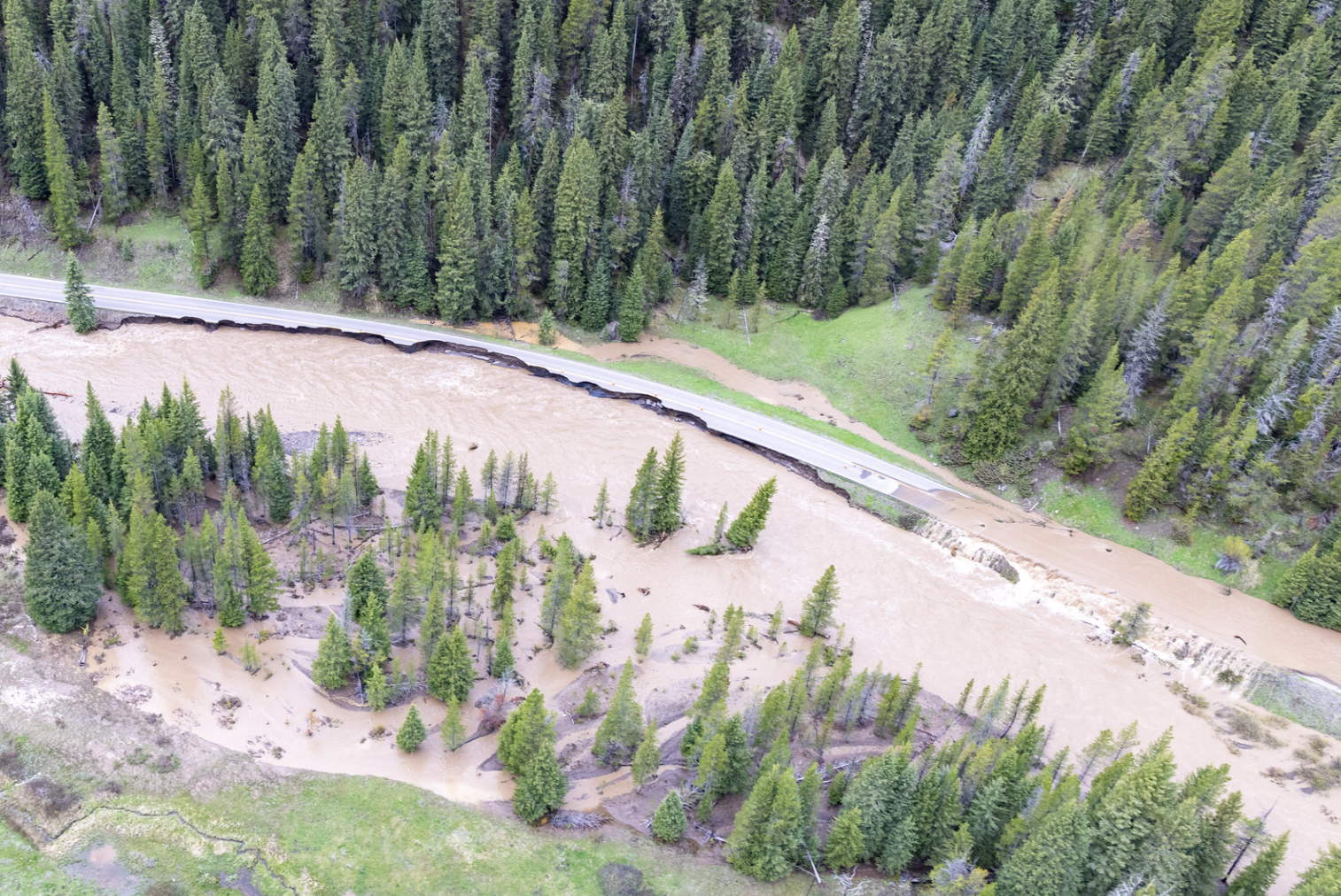
Northeast Entrance Road washouts Photo Courtesy by NPS / Jacob W. Frank
The impacts from the flood lasted long after the water receded. For much of the summer, the North Entrance Road to the Park and the Beartooth Highway were closed–cutting off the economic arteries of Gardiner, Red Lodge, and Cooke City-Silver Gate. Gena Burghoff–Owner of Prerogative Kitchen in Red Lodge–spoke about the burden of the economic loss in the film: “When those floods hit and the reality of us not making any money this year, once again, after COVID…I would not say that I took it well. I definitely had a little bit of a depression, anxiety hit hard,” Burghoff recalled. Her sentiment was echoed throughout the film.
The flood was a heavy burden felt across the county. In the depths of frustration and rattled by the flood’s impacts, the tight-knit communities showcased that relationships are invaluable to resilience. By centering around the voices of Park employees, hydrologists, business owners, first responders and community members, the film created a sense of pride in the auditorium for how the community collectively handled the crisis.
The flood was a harsh wake-up to the devastating impacts the changing climate will have on our communities. It has led us to think critically about how we can move forward into a period of resilience. The film closed with Cam Sholly’s words: “Every time it rains it’s a reminder [of] who is really in charge of this Park, it’s not us, it’s nature…I think it’s important that we’re not complacent in thinking these types of events can’t happen. And when they do, are we ready?” It was a question that hung in the air and one the Park County community is still asking.
Panel Discussion and Audience Participation
After the screening, Hugo Sindelar, the filmmaker, took a few moments to unpack the film and answer questions from the audience. He discussed his motivations to capture the lived experiences of the flood. He aimed to showcase community members' perspectives to provide a far deeper understanding of the event’s true impact. Letting the community tell its own story, the film brings into sharp relief the economic strain, slow recovery, and fractured livelihoods that rarely make it into broader disaster narratives.
With the impacts of the flood fresh on our minds, the panelists took the stage: Bill Berg, Cam Sholly, Stacey Joy, Wendy Weaver, and Colter Lumley. Berg was the moderator for the evening and after introducing himself handed the microphone over to Sholly. Right off the bat Sholly acknowledged a handful of folks who were crucial in helping get the road corridors restored so quickly. “So many of you played a critical role within the communities and in the Park to help us get through,” Sholly said. “ The strength of the relationships was proven. We've been through a lot, and I feel like there's almost nothing that we can't face together.”
Sholly then turned to plans for the new north entrance road, with construction slated to kick off next year. “ We’ve looked at the right engineering factors and picked the right corridor to build a road for the future that'll transcend all of our lifetimes,” Sholly said. He went on to discuss how the recent flood has impacted their planning process: “These events have helped us look through a different lens in how we build, where we build, and thinking about what could happen so that hopefully if something does happen, we’re better prepared,” Sholly said. The message was clear: the Park’s next chapter of development would be shaped not just by engineering, but by the humbling realities of a changing climate.
Shifting to a broader community perspective, we next heard from Stacey Joy–Owner and Operator of Wonderland Cafe & Lodge. Joy was featured in the film and fresh emotions surfaced from watching it. “We were in survival mode. I’ve never been there before. Don't ever wanna be there again,” Joy said. Directly after the flood, she had people calling to cancel their bookings at her lodge from June 14th through December. The flood and Park closure brought her business to a sudden standstill. Joy employs many folks in Gardiner who count on her for their livelihood. She felt an immense weight on her during and after the flood. “You're bleeding money, no income coming in, and you've got 35 people wanting work and a paycheck, and that’s pretty difficult,” Joy said. For Joy, the flood wasn’t just a natural disaster–it was a financial crisis, a leadership test, and a deeply personal reckoning, all at once.
Joy was struck by the lack of government resources provided after the flood. She couldn’t get a loan and there were no grants available. She had payroll due and no money. In the end, it was the mac and cheese that saved the day. A guest that has stayed at the lodge every year since it opened called Joy to check-in. Once she learned how dire the situation was she unpromptedly sent Joy money to cover payroll. The guest told Joy that not only does she love the lodge, but they have one hell of a mac and cheese. This support kept Joy going through the hard times. In the absence of institutional support, it was human connection that kept the lights on. “I do what I do here because I love the community,” Joy said. “It's hard to ask for help, but boy, it’s rewarding when you see the community come to your side when you do need it.” The flood took a great deal from Joy, but it also revealed that the community she so deeply loves was just as ready to love her back.
While Joy’s story captured the emotional weight of the flood, Bill Berg and Wendy Weaver brought the science into focus. Berg sets the stage for Weaver by reflecting on his own experience living next to the river. “ In the last 30 years, we've had two 100-year floods and one 500-year flood. Something about the math isn't mathing,” Berg said. The floods Berg lived through are a reflection of a broader trend: as the climate changes, extreme weather events like floods are becoming more frequent, more intense, and longer-lasting. While the probability of a 500-year flood event is slim, it could still happen every year. Berg then turns to Weaver and goes on to say: “We've got this amazing river running right through our county, and it's spectacular most of the time and troublesome some of the time. What are your thoughts?”
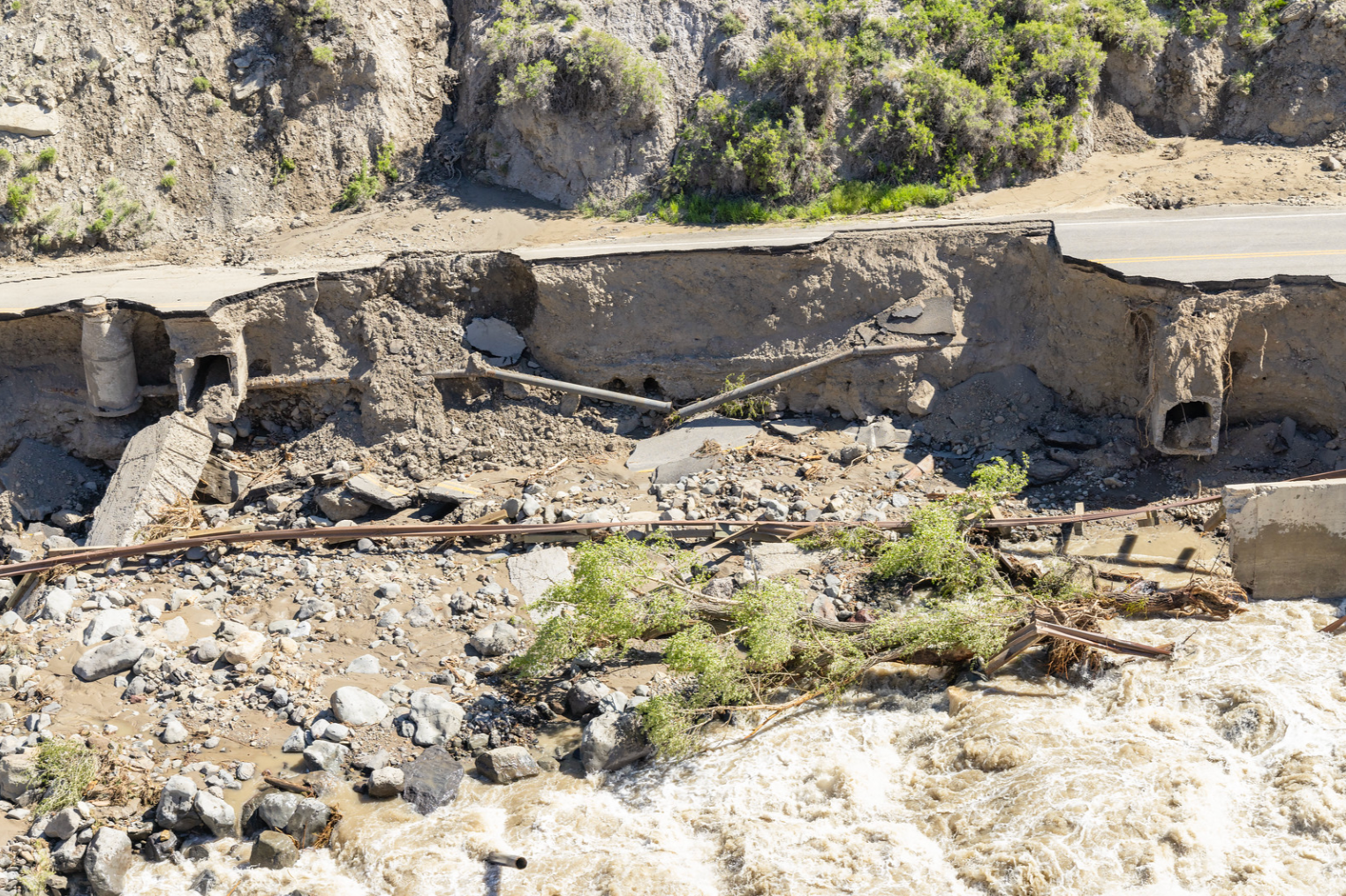
Yellowstone flood event 2022: North Entrance Road washout Photo Courtesy of NPS / Jacob W. Frank
It was an open question, genuinely posed and Berg had the right person next to him to help answer it. Wendy Weaver–Executive Director of Montana Freshwater Partners–spent most of her career working as a licensed professional civil engineer. She now refers to herself as “ a fully recovered engineer” and has a unique perspective on how we can live alongside the forces of nature. “ One of my very first projects as a young engineer was designing and building riprap barbs on the Double A Ranch following the '96, '97 [100-year] floods,” Weaver reflected. “30 years ago in engineering, we really believed that we could engineer and control our way out of our natural systems, and it took me a really long time to realize that that was not a good way to coexist within our natural systems.” That slow, humbling lesson–that nature cannot be engineered into submission—became the lens that has guided her work forward.
Weaver's work now centers on giving rivers room to roam and wetlands room to thrive. While floods can be destructive, they also help sustain a healthy resilient river. Floodwater recharges groundwater, nourishes wetlands, and shapes channels that support fish and wildlife. Floodplains act as a natural reservoir, storing water and releasing it back to the river later in the season when flows run low and the ecosystem needs it most. Healthy connected floodplains give rivers room to slow and store water, reduce destructive forces while sustaining the natural ecosystem processes. “We work really hard to try and advocate for the river to move across its floodplain,” Weaver said. At its core it’s a straightforward philosophy: work with the river, not against it.
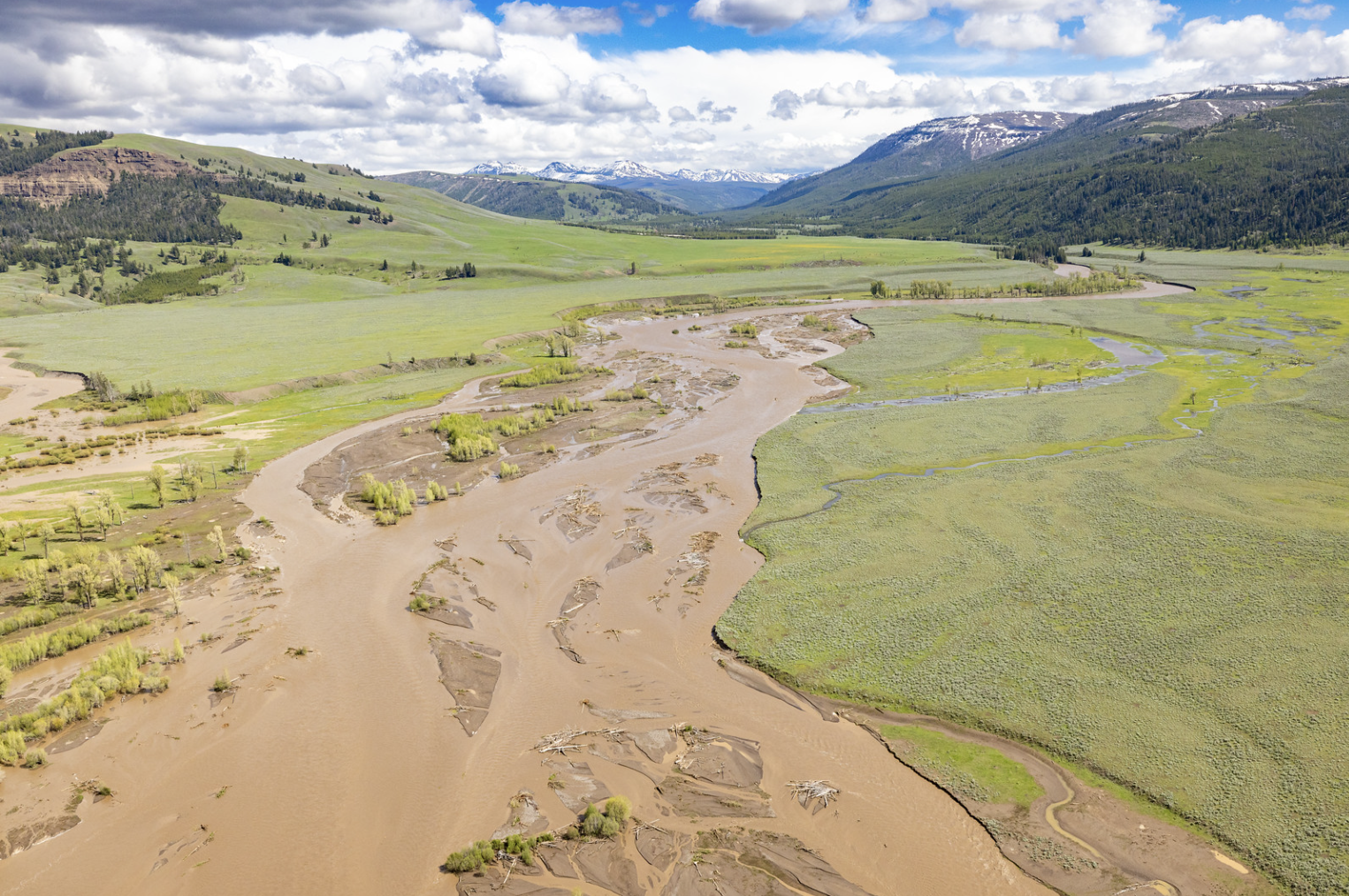
Yellowstone flood event 2022: Swollen Lamar River and Lamar Valley Photo Courtesy of NPS / Jacob W. Frank
With Weaver’s words still settling over the room, Berg brought the conversation full circle, turning to Lumley and asking him to reflect on what he had heard from the panel and seen on screen. Lumley didn't hesitate, and what he said cut straight to the heart of the evening: “ You never truly know how a community is gonna react during a time of crisis and from what I've seen, everybody should be proud of themselves,” said Lumley, “Everybody came together and helped each other. And it really just proves that Gardiner is superior to everywhere else.”
Lumley’s words set the tone for what followed–an outpouring of gratitude and shared experience that spilled from the panel into the audience itself. At the end of the Q&A, the floor was opened up to the audience. Cara McGary–local Yellowstone guide–stood up and said, “I just want to offer some gratitude. I've resiled through a few things, but the flood about broke me. I cannot express enough gratitude to you, Cam Sholly, and everybody on your staff, to everybody in the community as well for making it possible to stick it out through 2022.” Audience members continued to stand up to express gratitude for one another and share bits of their own flood stories. The evening truly connected us all. The telling of these stories is a way for people to understand the impacts of the flood, not just scientists showing graphs and data, but through the human experience.
The evening showcased the value of the human story. It’s not everyday that we experience life-altering traumatic events and it’s not everyday that communities gather to reflect on these events. Berg capped off the evening for us with a forward-looking sentiment: “ I'd like to think that at Colter’s 30th high school reunion, they'll look back and say, ‘You know, back there in the 2020s when they had that flood, they took some steps, and we're in better shape now.’ I'd love to think that's something that we can shoot for.” That vision of a more resilient future isn't just an aspiration; it's a work in progress, currently unfolding across Park County.
The summer of 2022 brought a reckoning. Intense rain on snow sent rivers surging across Park County, damaging homes, businesses, roads, and infrastructure, cutting off access to Yellowstone National Park, and leaving an estimated $128 million in economic losses in its wake. The following year, the Shields Valley flooded–a reminder that 2022 was not an anomaly, but a warning.
In response, local partners have gotten to work. PCEC along with the National Park Service, National Parks Conservation Association, Montana Freshwater Partners, Headwaters Economics, Park County, and American Red Cross have compiled a snapshot of flood resilience efforts across the county–cataloguing current projects, shared resources, and emerging opportunities–with the goal of sharpening coordination and tracking progress. It is, by design, a starting point, and PCEC invites the community to weigh in on what is missing. Because ultimately, no single agency, organization, or plan will determine how Park County weathers what comes next–that work belongs to the community as a whole. In a room full of people who had lived through the worst of it, the vision of a better-prepared future didn’t feel like a distant dream. It felt like a promise already in progress.