Moving at the Speed of Trust: A Reflection from the WCCN Conference
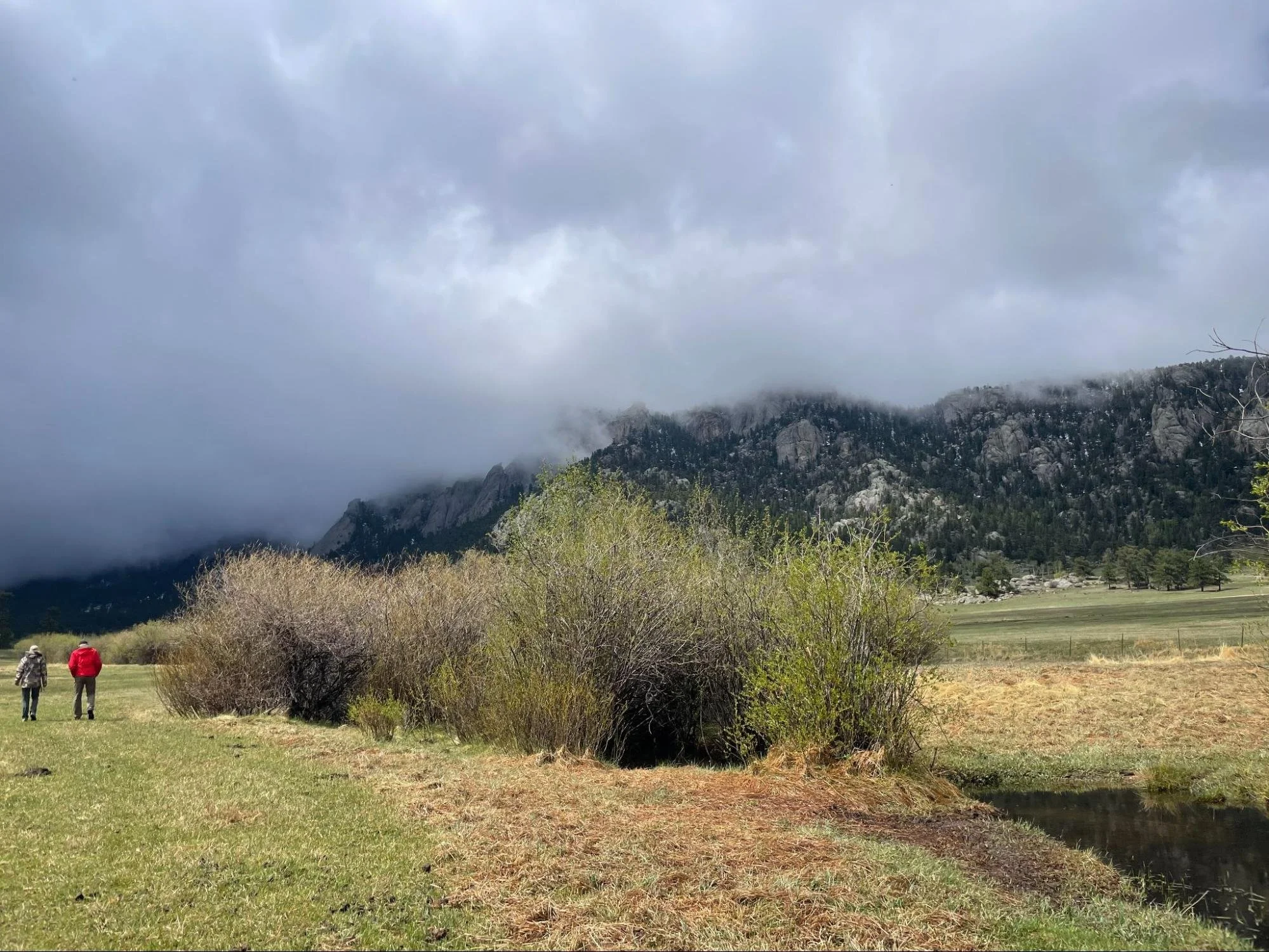
WCCN tour of Big Thompson River tributary restoration project.
Have you ever sat across a table from a neighbor, co-worker, or community member to navigate a truly difficult conversation? The Western Collaborative Conservation Network (WCCN) Conference I recently attended focused entirely on that challenge. For PCEC, this isn't just an occasional exercise—it is our daily reality. We don't pretend to have all the answers to the complex issues facing our area. Every day we figure out how to balance the long-standing ways we use and manage this land with new pressures for the future by working side-by-side with our neighbors to find practical solutions.
The WCCN brings together researchers, ranchers, tribal leaders, and conservationists precisely to learn how to navigate these tensions skillfully. The biggest takeaway for me was that when we shift our perspective from 'us versus them' or even 'humans versus climate’ to a collective 'us,' the goals, actions, and relationships change. It stops being about listening to win an argument and starts being about listening to find our inherent shared values. Understanding our shared stake in this landscape—whether you rent an apartment or own thousands of acres—is exactly what ignites the mutual trust needed to keep showing up for these tough, vital conversations.
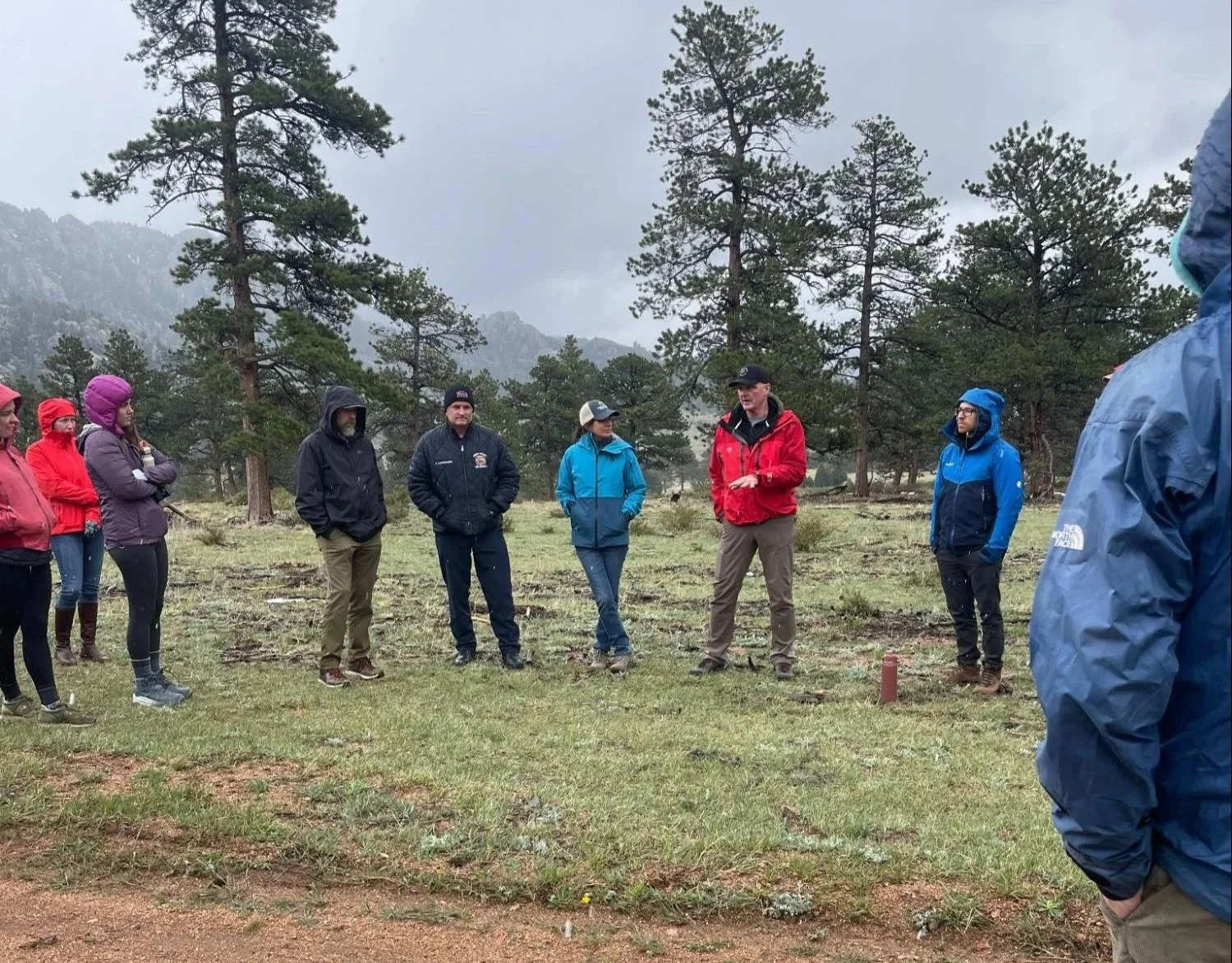
WCCN field trip to the Big Thompson River outside of Rocky Mountain National Park to learn about the forest thinning project for fire.
I was incredibly moved by the conference's major focus on the role of language in conservation. In many of the Indigenous languages, highlighted by the attending tribal leaders, the natural world isn't described in the third person. The earth, climate, wind, soil, air, and water are not spoken of as separate objects—they are spoken of as part of ‘us’, in the first person. I am no linguist, but I do know language is something that unites or separates us, and can be a meaningful tool if we can find a shared understanding.
The way we are taught to speak in modern English creates a distinct divide between us and the very systems we need to live. This isn't just a metaphor; it’s a highly practical truth. When we stop viewing nature as something separate from ourselves, our entire approach to community and conservation changes, and our sense of belonging and purpose shifts.
Time and experience have a way of bringing that kind of shift to light. When I first started with PCEC in 2022, the WCCN conference happened to be right in our backyard at Chico Hot Springs. I had only been in Livingston for two months. Back then, I was standing on the outside looking in, simply waiting until it felt like I was a part of this community.
Attending the conference again, in Colorado four years later, gave me a completely different perspective. I wasn't just trying to find my footing anymore; I returned with a much deeper connection to both the broader conservation community and my local community here in Park County. Zooming out didn't distance me from our local challenges; it reminded me that the pressures we face—whether it is managing river recreation, preparing our communities for fire and flood, finding consensus on forest health, or navigating land-use planning—are shared by communities across the West. It highlighted something we all hear—but often don’t know how to do—that building stronger connections with our neighbors, both locally and regionally, is how we build true resilience.
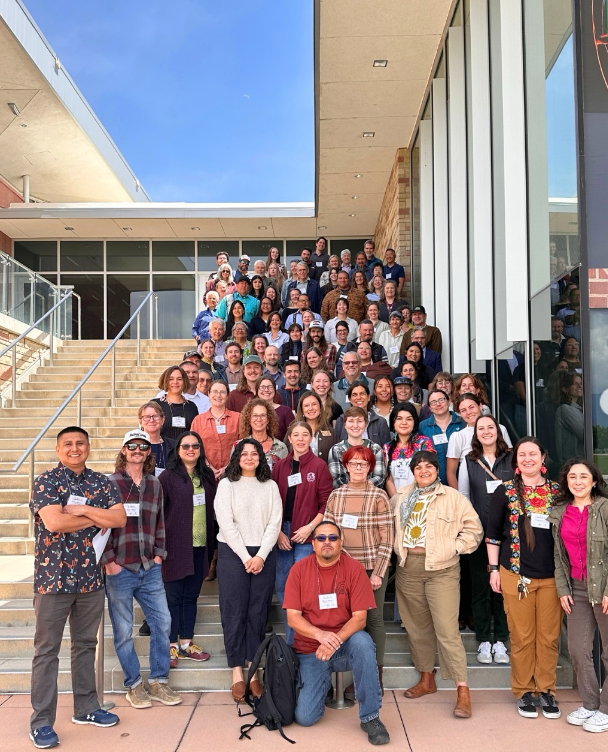
WCCN 2026 Conference Attendees in Fort Collins at the University of Colorado.
This experience made it clear that if we are going to confront these massive issues over the long haul, we cannot wait for a crisis or a disagreement to bring us together. We need positive, regular opportunities to gather as neighbors and remember why we care about this place and our connection to it. Relationship-building isn't a byproduct of conservation; it’s the foundation. We simply cannot protect a watershed or a forest if we ignore the community that lives and works on the landscape.
We won't always agree on the mechanics of a forest health project, the placement of a gravel pit, or how to best manage river recreation. But we do agree on the value of this place. Our human, wildlife, and forest communities are physically and functionally connected by the same water. Because we share the infrastructure of this landscape, we share a responsibility to sustain it together.
People are actively doing this work of connecting all over Park County—it is one of the reasons I celebrate living here. Check out PCEC’s upcoming events to meet some new faces. I know it can be hard to show up after a long day of work or play, but it’s always worth it. If you are looking for more opportunities to connect with your neighbors, anchor yourself in this place, and help care for our shared home, our community is full of active opportunities to dive in:
Livingston Loves Trees
Upper Yellowstone & Shields River Watershed Groups
Leadership 49
Elks River Arts & Lectures
Public Lands Action Network
Livewell 49
Livingston Bike Club
Wild Livelihoods
Green Initiative
Yellowstone Gateway Business Coalition
...and the list goes on.
We might not always see eye-to-eye, but by simply showing up, listening, and engaging with these local efforts, we create the trust and neighborly relationships required to tackle our biggest challenges. Thank you for being an active part of this community, and for continuing to sit at the table with us.
If you would like any help connecting with any of the groups above, or have a group you would like to share, please reach out—I would love to help be a connector.