Seeds of Stewardship
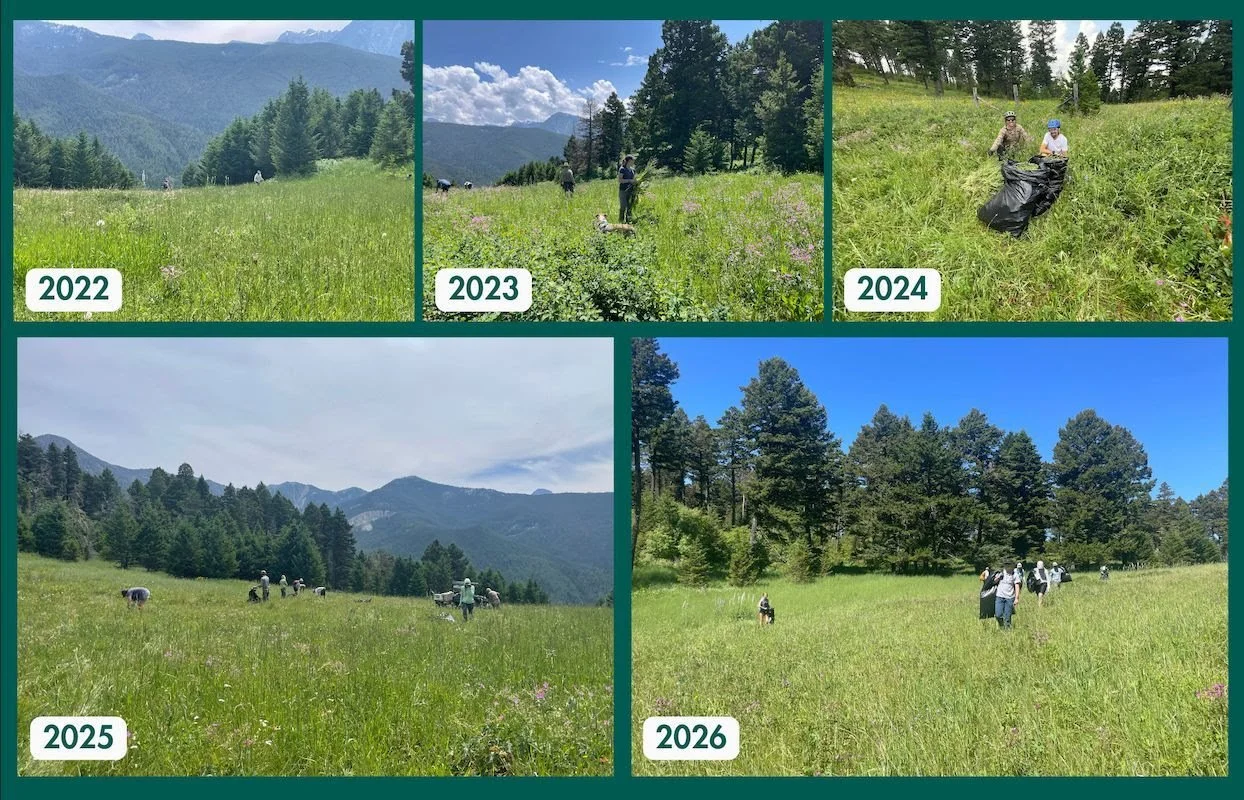
Years of weed pulls at Livingston Peak meadow
Despite the heavy heat, 15 dedicated community land stewards hiked to a high-elevation meadow along the Suce Creek trail earlier this month for our annual weed-pull event. As our volunteers and partners crested the hill, there was a moment of disbelief. The wall of houndstongue we had battled for years was basically gone. Instead of the grueling effort of endless pulling like normal, it felt like a scavenger hunt searching for houndstongue and musk thistle.
This multi-year stewardship project was first set in motion in 2019 when the area was identified as a priority for invasive weed management by the U.S. Forest Service (USFS). In 2022, PCEC partnered with the Absaroka Beartooth Wilderness Foundation (ABWF), Livingston Bike Club (LBC), and the USFS to turn that warning into a community weed-pull focused on actively restoring critical wildlife habitat on our public lands.
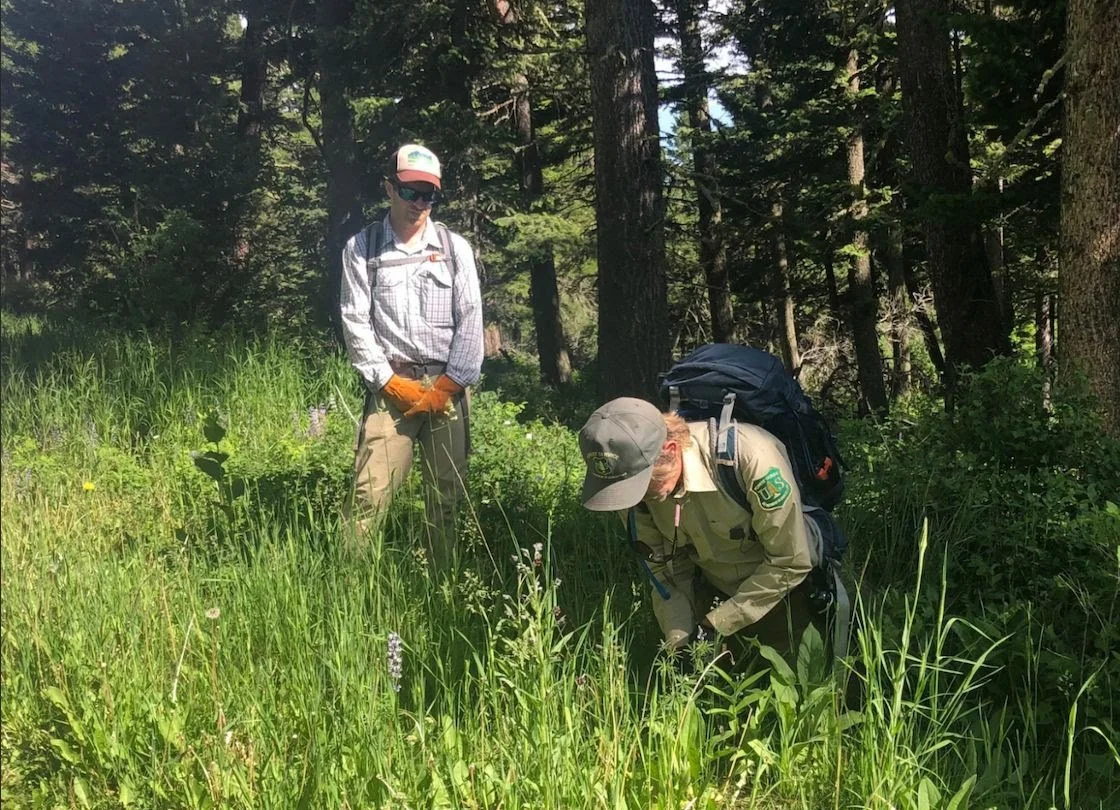
2022 Livingston Peak Weed Pull
We often think of subdivisions and roads as the forces that fragment open space. But invasive plants do the exact same thing. By pushing out native forage, noxious weeds create biological barriers that can sever connected, critical wildlife habitat in our wildest places. By protecting this meadow and trail, we aren't just pulling weeds—we are keeping a vital corridor open for the wildlife that call Livingston Peak home.
To track our impact, I set up monitoring sites to map the infested areas before we pulled a single weed. In 2022, the wildflower meadow was overrun by houndstongue—that pesky biennial (two-year life cycle) with Velcro-like seeds that hitchhike on your dog’s fur, your shoes, and wildlife. Musk thistle, spotted knapweed and Canada thistle were flagged as well. Because houndstongue and musk thistle are biennials that rely on seeds to reproduce, we targeted them for hand-pulling—removing them before they seed directly disrupts their life cycle.
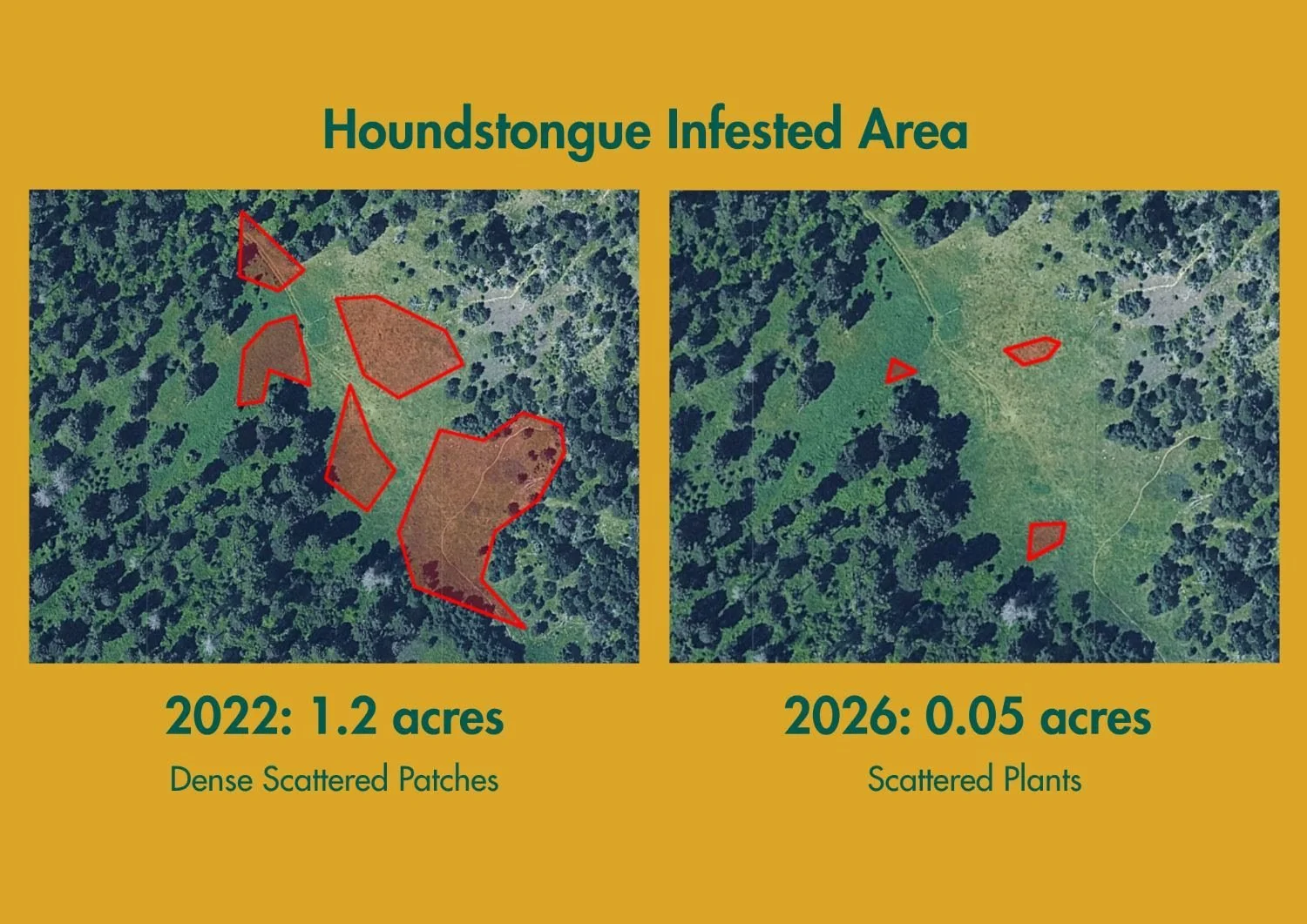
The map on the left shows the heavily infested areas we faced in 2022; the map on the right shows what we found this year.
Five years of measuring our impact has shown that our community’s collective sweat is helping restore the landscape. Since focusing our efforts on the Livingston Peak trail and meadow, our community-driven work has cleared approximately 10 acres of infested habitat, including an incredible reduction in the meadow where we shrunk the houndstongue infestation from 1.2 acres down to 0.05 acres. That total footprint of reduction is a testament to every volunteer and partner who put their hands in the dirt to make it happen.
Together, we’ve successfully stopped a major infestation of houndstongue in this meadow and all along the approach trail. While spotted knapweed is still trying to inch its way down the hillside, we are collaborating with the USFS on long-term management strategies for this stubborn perennial (a plant that lives more than two years).
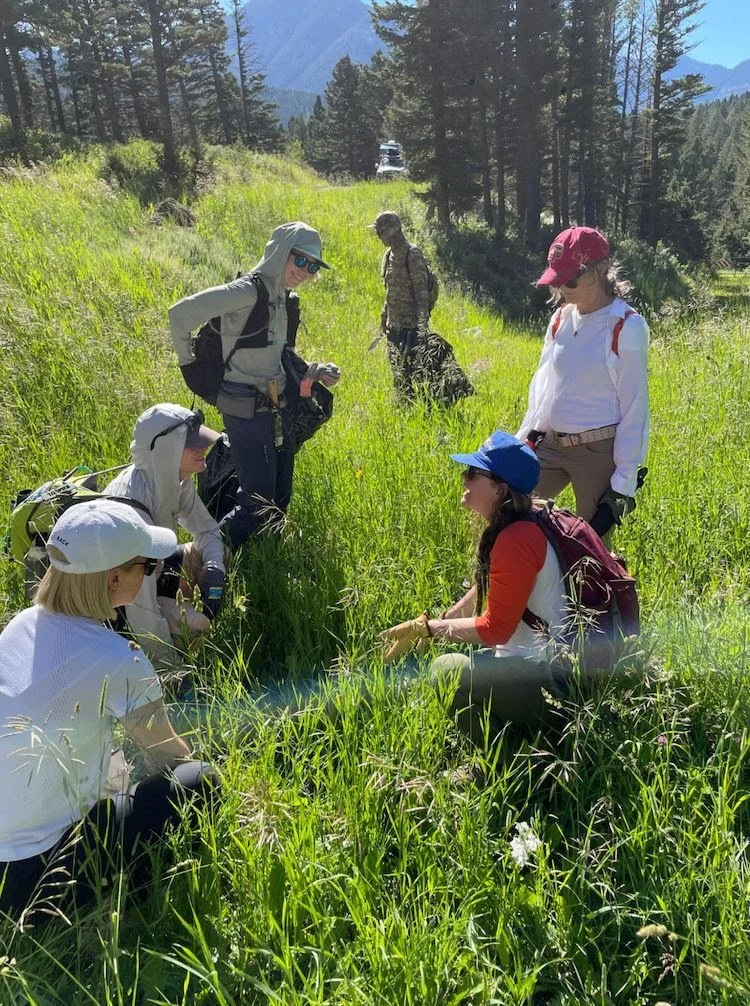
2026 Livingston Peak Weed Pull
The weed pull in 2022 was my very first event with PCEC. As a newcomer to Livingston, it was where I met people I now call friends, and people I reunite with every July to continue the work and celebrate our progress. Returning to the meadow this year with our volunteers—some who have been with us since day one—was incredibly exciting and rewarding. There is simply no better way to build community than getting hot, tired, and dirty together doing good work.
How You Can Help
We’ll be heading back up to the Livingston Peak area meadow next year to keep the pressure on those stubborn weeds—but we aren't stopping there. With our partners and volunteers, we are actively searching for other vulnerable backcountry spaces in Park County where we can replicate this success and grow our stewardship initiatives.
Organizing these days, tracking progress, providing training, and keeping our wild corridors connected takes a lot of behind-the-scenes coordination. If you believe in this work, please consider making a donation to support our land stewardship initiatives.
Other Ways To Get Involved
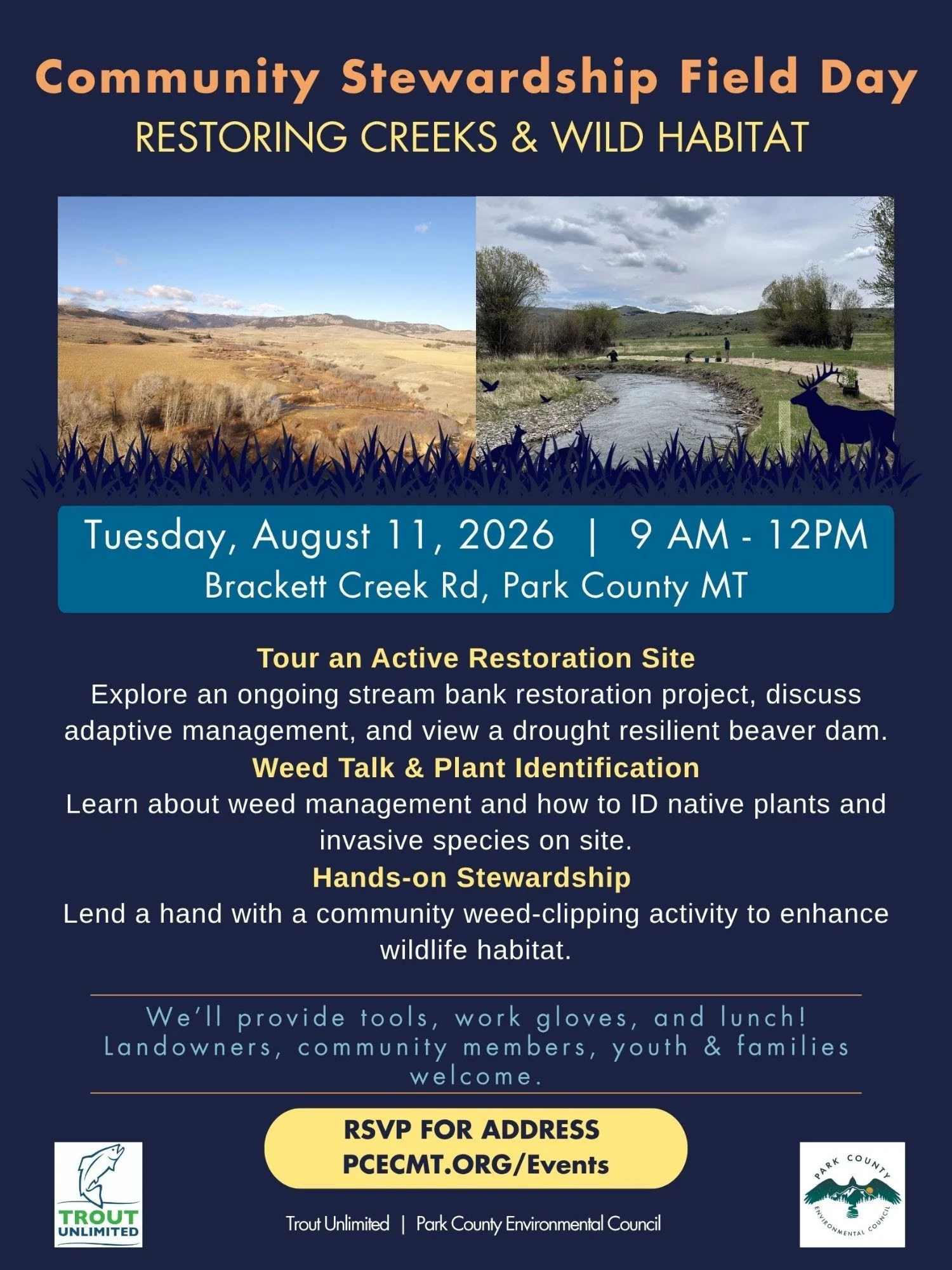
1. Join us on Aug 11th with Trout Unlimited for another hands on stewardship field day, click here to learn more and sign up today.
2. Join PCEC’s Volunteer List: Click here to sign up and stay connected. Be the first to know about new opportunities to get your hands dirty with us.
3. Report Backcountry Weeds: If you spot a large infestation of noxious weeds on Park County backcountry public lands, snap a photo and map it using Seek or EDDMapS, and let me know!
4. Watch for Species of Concern (SOC): If you spot any sensitive native plants or wildlife, report them to the Montana Natural Heritage Program to help guide local conservation and protection efforts. SOC are native organisms that are at-risk due to declining population trends, threats to their habitats, restricted distribution, and/or other factors. Below are a few of the SOC species in Park County to look out for:
Ute Ladies'-Tresses (Spiranthes diluvialis)
Status: State Rank S1 (Critically Imperiled) | Federally Listed as Threatened
This rare, ivory-flowered orchid grows in low-elevation, calcareous wetlands, wet meadows, and old stream meanders. Populations are highly susceptible to changes in local hydrology, development, and invasive weeds.
Field Guide Link: Ute Ladies'-tresses — MNHP Field Guide
Spiny Hopsage (Grayia spinosa)
Status: State Rank S2 (Imperiled)
Within Montana, this woody, spine-tipped shrub is highly restricted, growing primarily in dry, alkaline salt-desert shrublands—including the unique microclimates near Gardiner in southern Park County. It is highly palatable and vulnerable to heavy grazing and cheatgrass invasion.
Field Guide Link: Spiny Hopsage — MNHP Field Guide
Waterfall Copper Moss (Haplodontium macrocarpum)
Status: State Rank S1 (Critically Imperiled)
An incredibly rare non-vascular plant. In Montana, it is known historically from a single collection site on a wet limestone cliff in Park County. It is specialized to moist, calcium-rich vertical rock faces.
Field Guide Link: Waterfall Copper Moss — MNHP Field Guide
Northern Moonwort (Botrychium pinnatum)
Status: State Rank S3 (Vulnerable)
This small, primitive fern-like plant grows in a variety of moist habitats, including high-mountain meadows, grassy stream banks, and damp woods. Moonworts are highly sensitive to soil compaction and hydrological changes.
Field Guide Link: Northern Moonwort — MNHP Field Guide