Speak Up for Montana's Wolves: Public Comments Due August 12
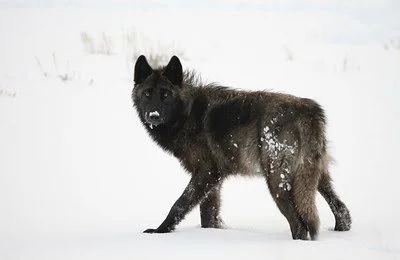
Wolf in Lamar Valley. Photo by Jim Peaco, 2009
Montana's wolves are facing a pivotal moment, and your voice can help shape their future.
Montana Fish, Wildlife & Parks (FWP) has released its proposed 2026–2027 wolf hunting and trapping regulations, and the Fish and Wildlife Commission will make its final decision on August 19. Public comments are being accepted through August 12, and we are asking you to take a few minutes to submit a personal comment.
A Step Forward
For years, we've urged FWP to improve the scientific model used to estimate Montana's wolf population. We're encouraged to see the department respond by developing iPOM 2.0, an updated population model that incorporates better data and improved science, including:
Updated occupancy modeling using newer data and statistical methods.
Better estimates of wolf territory sizes under different population densities.
More recent pack size observations.
Montana-specific data on lone wolves gathered from GPS-collared animals.
These improvements matter.
Using the updated model, FWP now estimates Montana's wolf population at approximately 725 wolves, compared to the previous average estimate of 1,024 wolves under iPOM 1.0. The new analysis also shows a 22% decline in Montana's wolf population between 2021 and 2025.
We appreciate FWP's commitment to improving the science and moving the updated model forward for peer review. This is an important step toward better wildlife management.
What the Proposal Means
In response to the updated population estimates, FWP has proposed reducing the statewide harvest quota from 452 wolves to 250 wolves. While this appears to be a significant reduction, last season's harvest was 247, meaning the change maintains the current level of harvest opportunity.
The proposal would also:
Reduce the Region 3 quota from 60 wolves to 33 wolves.
Maintain separate quotas of three wolves each in Wolf Management Units (WMUs) 313 and 316, adjacent to Yellowstone National Park.
Why Our Region Matters
Here in Park County (Region 3), wolves are more than just another wildlife species.
As the gateway to Yellowstone National Park, our community benefits from a healthy wolf population in many ways. Wildlife tourism is a cornerstone of our local economy, with wolf watching alone generating more than $82 million annually for communities throughout the Greater Yellowstone Ecosystem. This also means that wolves in Yellowstone are more accustomed to and tolerant to the presence of people.
Wolves also play a vital ecological role and continue to contribute to world-renowned scientific research that benefits wildlife conservation around the globe.
Given the significant documented population decline, a cautious approach is needed.
What We'll Be Asking the Commission to Do
In our comments to the Commission, we'll recommend that FWP:
Include WMUs 313 and 316 within the overall Region 3 quota of 33 wolves, rather than allowing additional harvest outside that total.
Reduce the bag limit to one wolf in WMUs 313 and 316 to help prevent repeated over-quota harvest of wolves that spend much of their time inside Yellowstone National Park.
Return to regional wolf management, allowing harvest decisions to reflect local population trends and conditions rather than relying primarily on a statewide quota.
Establish a moratorium on the hunting of collared wolves. These animals provide invaluable scientific data, and the investment made to collar them should not be lost through unnecessary harvest.
Support Commissioner Brooke's Amendment
On August 3, Region 3 Commissioner Susan Brooke introduced an amendment that would:
Reduce the bag limit to one wolf in WMUs 313 and 316.
Reduce the Region 3 bag limit to five wolves per hunter, down from the current proposed statewide limit of ten.
We will be submitting comments in support of Commissioner Brooke's amendment and encourage you to do the same.
Please Submit a Comment by August 12
Personal comments are among the most effective forms of public input.
You don't need to write a long letter. A few sentences explaining why wolves matter to the ecosystem, why science-based management is important, or why you support a more cautious approach in Region 3 can make a real difference.
Here are a few points you could mention:
Support for updating the wolf population model with better science.
A more cautious approach to quota setting given the documented population decline.
Count WMUs 313 and 316 toward the total Region 3 quota of 33 wolves
Reducing bag limits in WMU’s 313/316 and Region 3 - Support for Commissioner Brooke’s amendment
Returning to regional wolf management.
Protecting collared wolves used for data collection.
Thank you for standing up for science-based wildlife management and for helping ensure wolves remain an important part of Montana's landscapes for generations to come.