ATTENTION: It’s time to secure your bear attractants
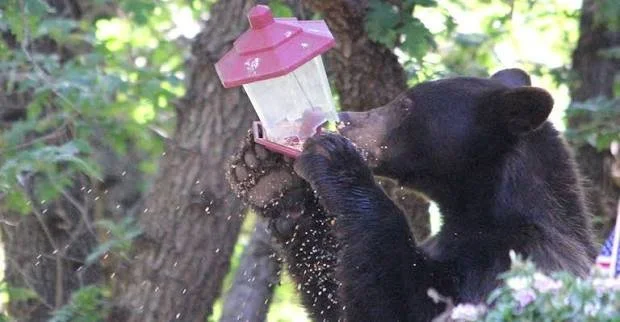
Black bear turning a bird feeder into a meal.
Last week, I returned home on my bike and heard loud huffing and the scraping of bark as I entered my backyard. It was pitch dark, but I knew instantly that I’d just treed a bear. Feeling lucky that I’d encountered a bear still scared of humans, I hurried inside.
My backyard has a large apple tree and while I’d picked up the fallen apples that morning, I hadn’t been diligent about consistently picking them up. The bear must have capitalized on the fruit a different evening and was returning for another delicious easy snack.
Encountering a bear in my backyard in town opened my eyes to the obligation we all share to keep our communities—both human and bear—safe. We live in bear country and bears have been encountered regularly in town recently. Please help play an active role in keeping our community safe and reducing the risk of human-bear conflicts.
Secure ALL bear attractants:
Bring bird feeders indoors until November. Birds have an abundance of natural foods available.
Store garbage inside your home, a garage, or shed until morning of pick-up, or invest in a bear-resistant garbage can.
Bring pet food inside at night.
Pick all fruit off trees and bring it to the Livingston Farmers Market if you don’t want to keep it (see more information below).
Clean outside grills and BBQs thoroughly after each use. Burn on high (500º+ for 5 minutes) after use.
Install electric fences around bees and chickens if you live outside of City limits. Call FWP or Bear Awareness Gardiner for assistance (see below for contact info).

Knocked over trash can with trash splayed on the ground.
Right now, bears are in hyperphagia — the intense pre-hibernation feeding phase when they need to pack on as many calories as possible before winter. Once a bear finds an easy food source, it will remember and return, growing bolder each time. A bear at a bird feeder might make for a great photo, but leaving that food source in place teaches the bear to associate humans with an easy meal. Over time, this erodes bears’ natural wariness of people, increasing the risk of food conditioning and dangerous encounters — a potential threat to community safety, and one that too often results in the bear being removed. By securing attractants around our homes and encouraging our neighbors to do the same, we can protect our community and keep bears wild.
Remember, it is illegal to intentionally feed wildlife in the state of Montana. This includes bears as well as deer and turkeys.
If you encounter a bear:
Do not approach or feed it.
If it is an emergency (bear is acting aggressively, damaging property, or attacking humans or pets) call 911.
If it is a non-emergency call our local FWP office at: 406-577-7900.
For help securing attractants contact Bear Awareness Gardiner:
Evan Stout: evan@yellowstonewildlifeguidecompany.com
Blakeley Adkins: adkins.blakeley@gmail.com

Grizzly sow and cubs in Yellowstone National Park. Photo Credit: NPS/Eric Johnston.
After my bear encounter, I woke up worrying about the bear that was so far from the woods and scared of what would happen if they got too comfortable around humans. It’s human behavior that puts bears at risk. Apples are essentially the "gateway drug" for habituation. And this isn't just about grizzlies: black bears that learn to associate people with food can become dangerously aggressive, a pattern seen in communities across the country.
It's up to us to secure attractants and reduce the opportunities that lead to conflict. Our actions make the difference, and when we do nothing, the consequences are often lethal for bears.
Please share this information with your neighbors and friends to protect humans and bears. Reach out to us if you have any questions or need assistance—we're here to help.
