Inside a Community Stewardship Field Day

Volunteers enjoying lunch after a morning of learning and working together–Photo courtesy of Ashley Brubaker
I froze mid-step. Etched into the mud were two sets of tracks overlaying each other: beaver and black bear. Filled with excitement, I waved the group of volunteers viewing the nearby beaver dam over to examine the tracks. My discovery was a clear indicator that we weren’t just at a restoration site. We were guests in a prosperous wild neighborhood.
In August, Park County Environmental Council (PCEC) and Trout Unlimited (TU) partnered to host a Community Stewardship Field Day at Brackett Creek. Ashley Brubaker (TU Project Manager) led a group of eager land stewards through her ongoing stream bank restoration project and Bethany Allen (PCEC Wild Habitat Director) taught us hands-on invasive weed management. It was a day built around a simple idea: healthy streams and healthy communities grow the same way, through consistent, collective care.
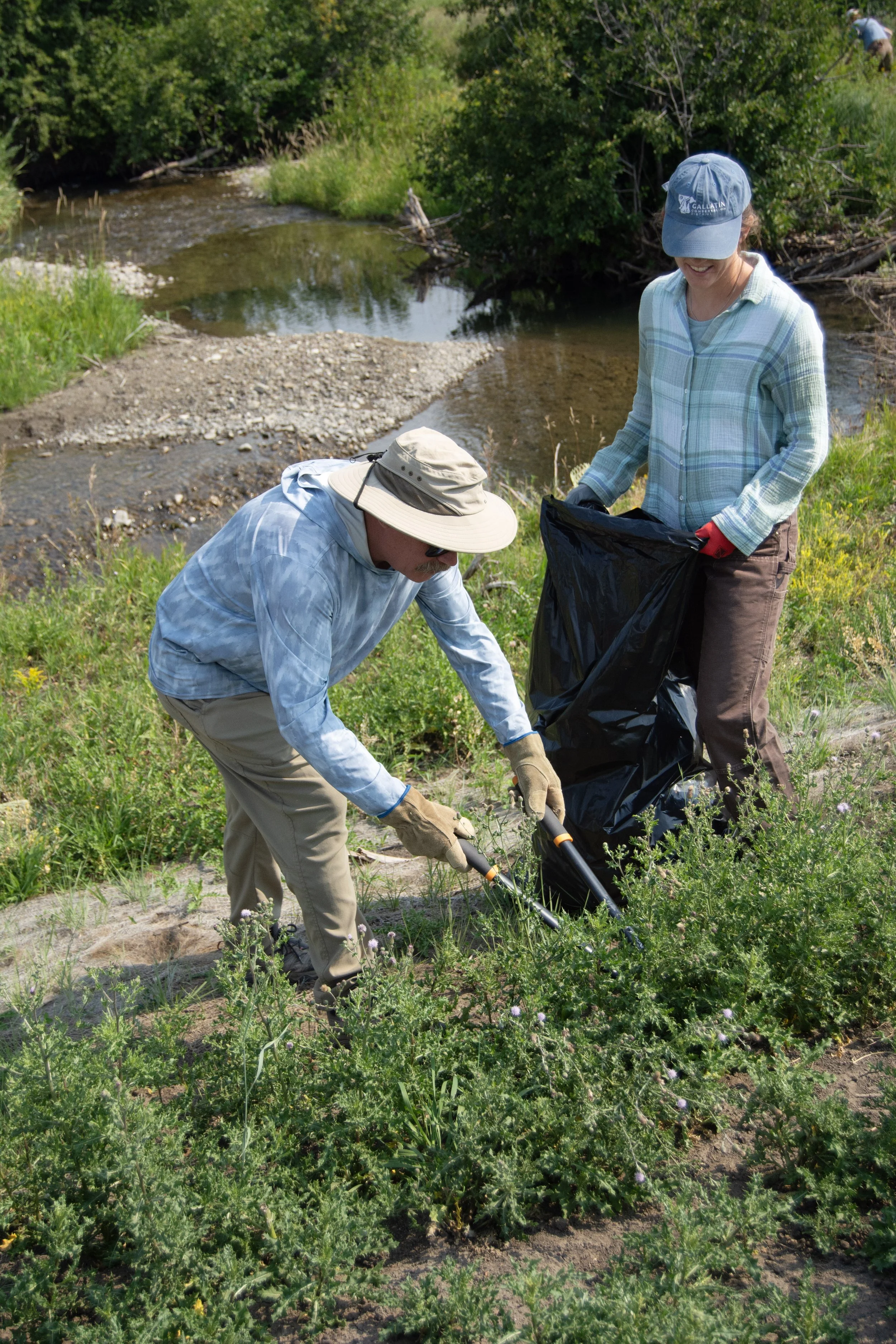
Removing invasive weeds from restored stream bank–Photo courtesy of Ashley Brubaker
Brackett Creek is a crucial tributary of the Shields River. It plays a vital role in storing moisture and stabilizing water temperatures for the frequently dewatered Shields. Keeping Brackett Creek healthy protects and sustains native Yellowstone cutthroat trout, wild brown trout, and the broader riparian community that depends on an intact stream corridor. Historic land use has led to instability and excessive bank erosion, contributing to excess fine sediment, a lack of deep pool fish habitats, and high potential for further channel degradation and habitat loss.
Luckily, the current landowners have been working with TU for over a decade to rehabilitate Brackett Creek and improve overall watershed resilience. This portion of the ongoing restoration is focused on bank stabilization, sediment input reduction, floodplain connectivity, and fish habitat enhancement. In 2025, bank reconstruction began on the site. A lasagna layer of live and dead wood stems–consisting mainly of willows and junipers–were compacted along edges of the creek and backfilled with native alluvium. This technique re-establishes a riparian buffer, expands the flood prone area, and reduces bank height. Additionally, it encourages the growth of native vegetation whose roots provide long-term bank stability.

Brackett Creek Restoration Site–Photo courtesy of Ashley Brubaker
The results were jaw-dropping. Banks that were towering above the stream bed, now gradually slope down to the water. The layered wood sticking out into the channel mimics natural undercut banks and provides crucial cover and food sources for fish. However, restoration isn’t a one-time fix, it needs continued stewardship. When disturbance such as excavators digging out a stream bank occurs on a landscape, it opens up prime real-estate for invasive weeds to establish. Which is where PCEC and the group of volunteers come in.
With a vision for a community-centered field day, Brubaker reached out to Allen–an invasive weed extraodinaire–to design a day centered around hands-on stewardship and invasive weed management. Neighbors, volunteers and conservation partners gathered to walk along the creekside, ask questions, get their hands dirty and share a meal together.
We learned to identify invasive species and distinguish them from the native plants the restoration depends on to hold banks together and reestablish habitat. After a spirited discussion, we rolled up our sleeves and got to work. We focused our energy on lopping the flower heads off common tansy and musk thistle. Every invasive weed we removed freed up room for native vegetation to take root and thrive.
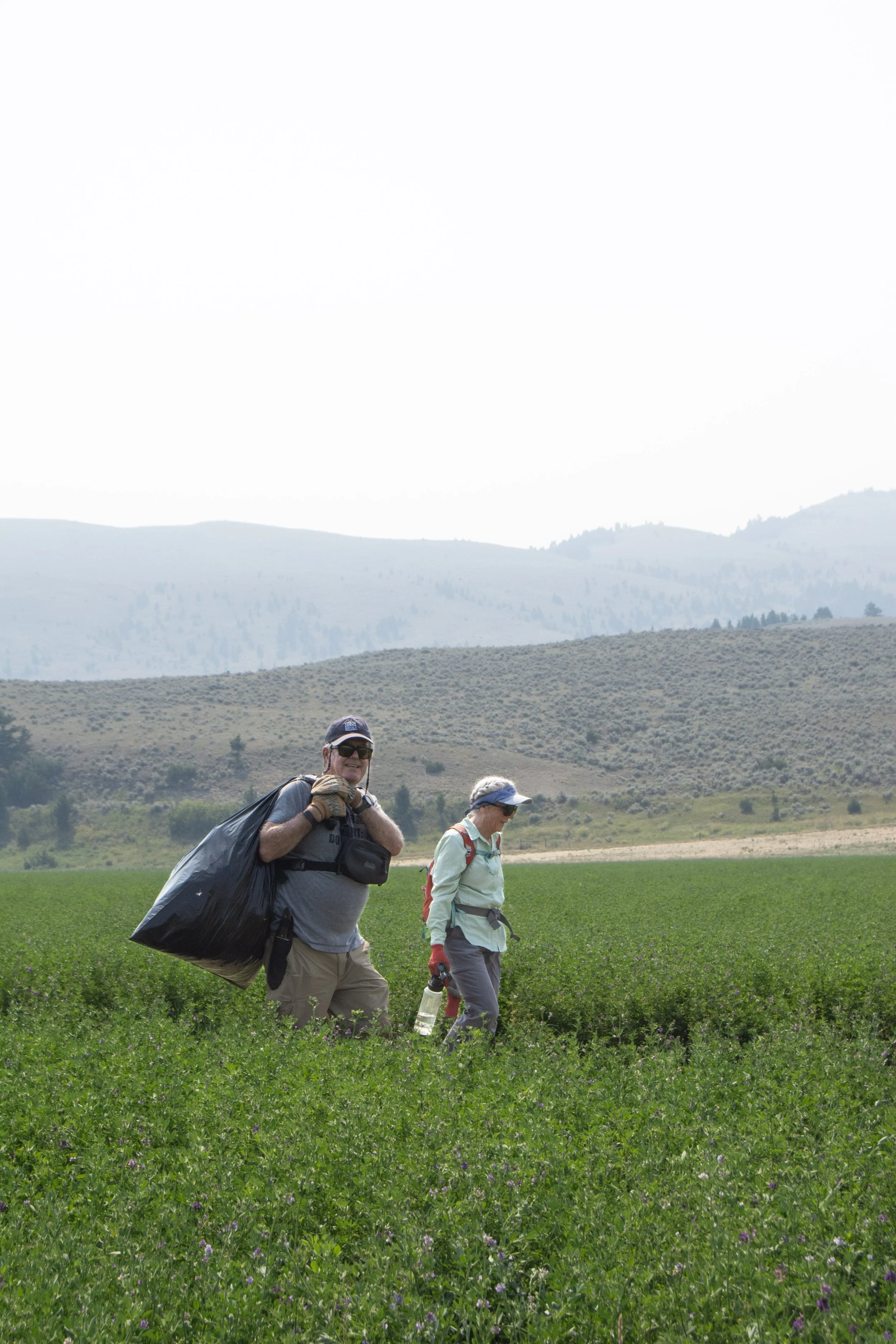
Trash bag full of invasive weed flower heads–Photo courtesy of Ashley Brubaker
After our diligent work, we hauled trash bags full of invasive weeds back to our cars and gathered for a well earned lunch. It was extremely rewarding to see the impact a group of dedicated stewards can have on the landscape, but my favorite part was watching folks meet each other and form connections while caring for our watershed.
Days like these are a reminder that conservation isn’t only policy and permits, its neighbors spending a morning together outside, learning from each other, and leaving the land a little better than they found it. Brackett Creek is healthier today because people showed up for it. We're grateful to everyone who joined, and we're looking forward to more community stewardship field days in the future.