Following Bison: Yellowstone National Park’s Bison Conservation Transfer Program
In late February, under a wide Montana sky, I had the rare honor of following a group of Yellowstone bison on a journey home.
These weren’t just any animals, and this wasn’t just a relocation. Through Yellowstone National Park’s Bison Conservation Transfer Program, these bison—tested and certified disease-free—were being given a second chance. Instead of being sent to slaughter, they were headed to tribal lands, where their return helps restore not only the landscape, but also cultural traditions and treaty rights that stretch back generations.
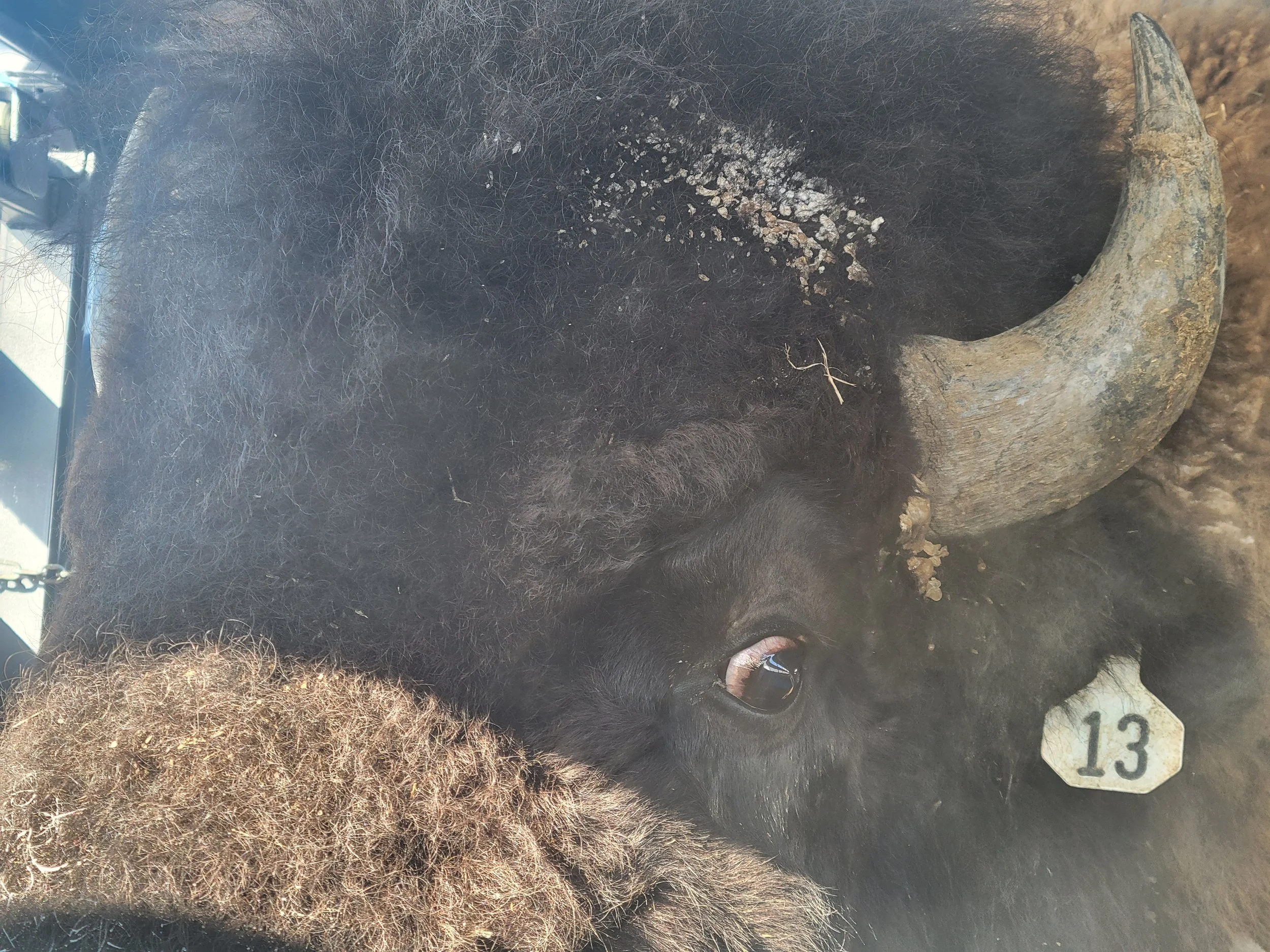
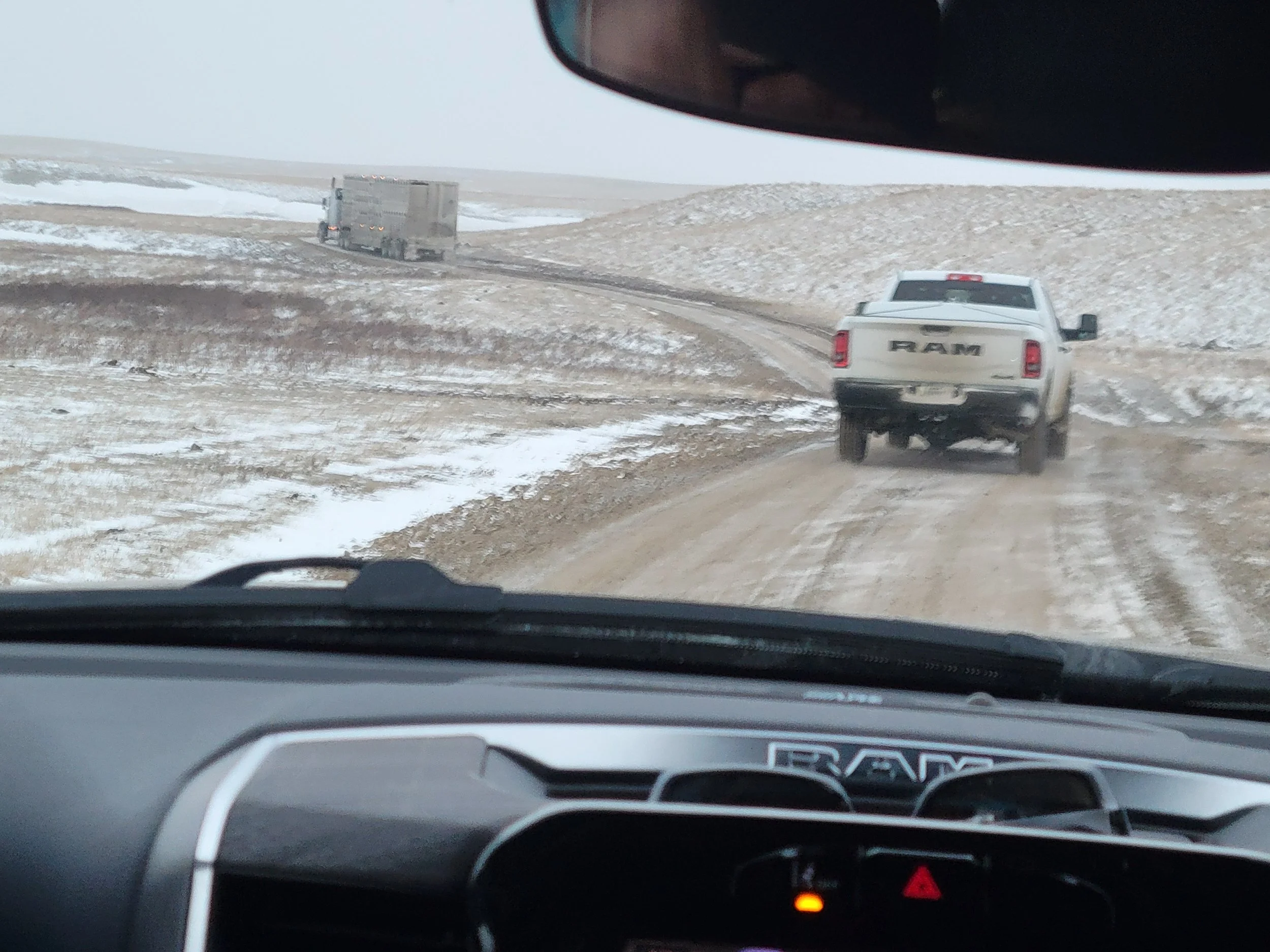
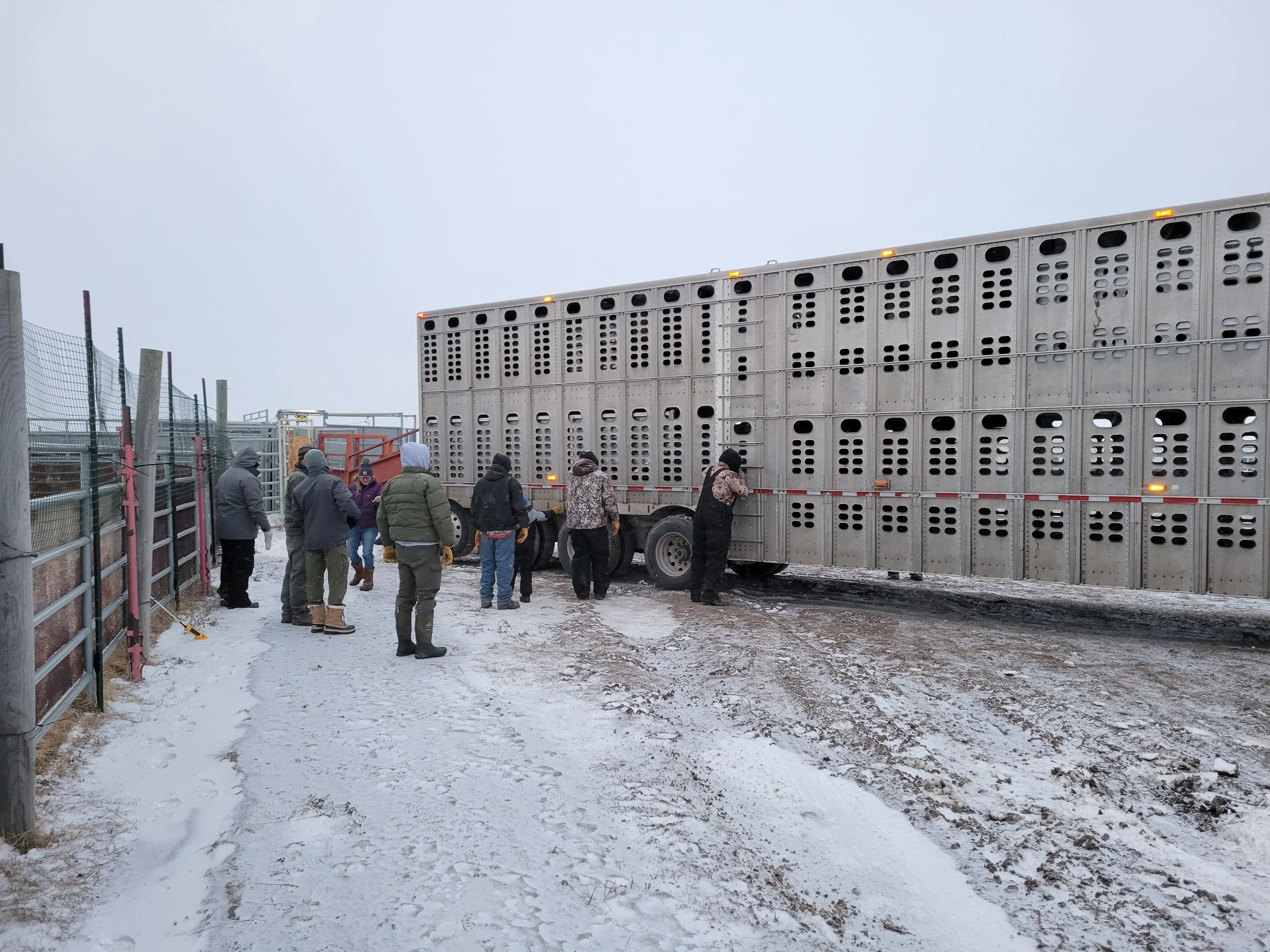
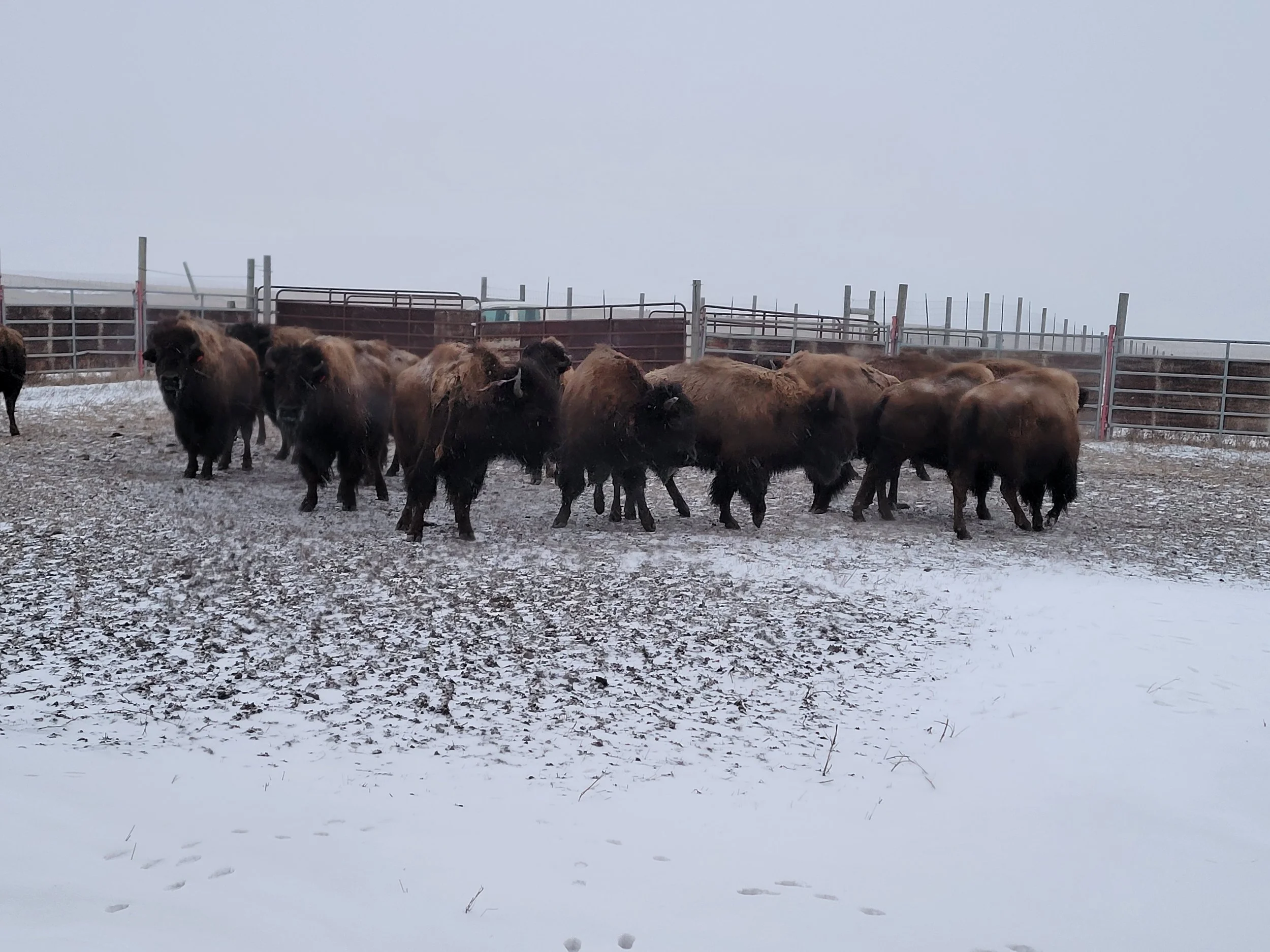
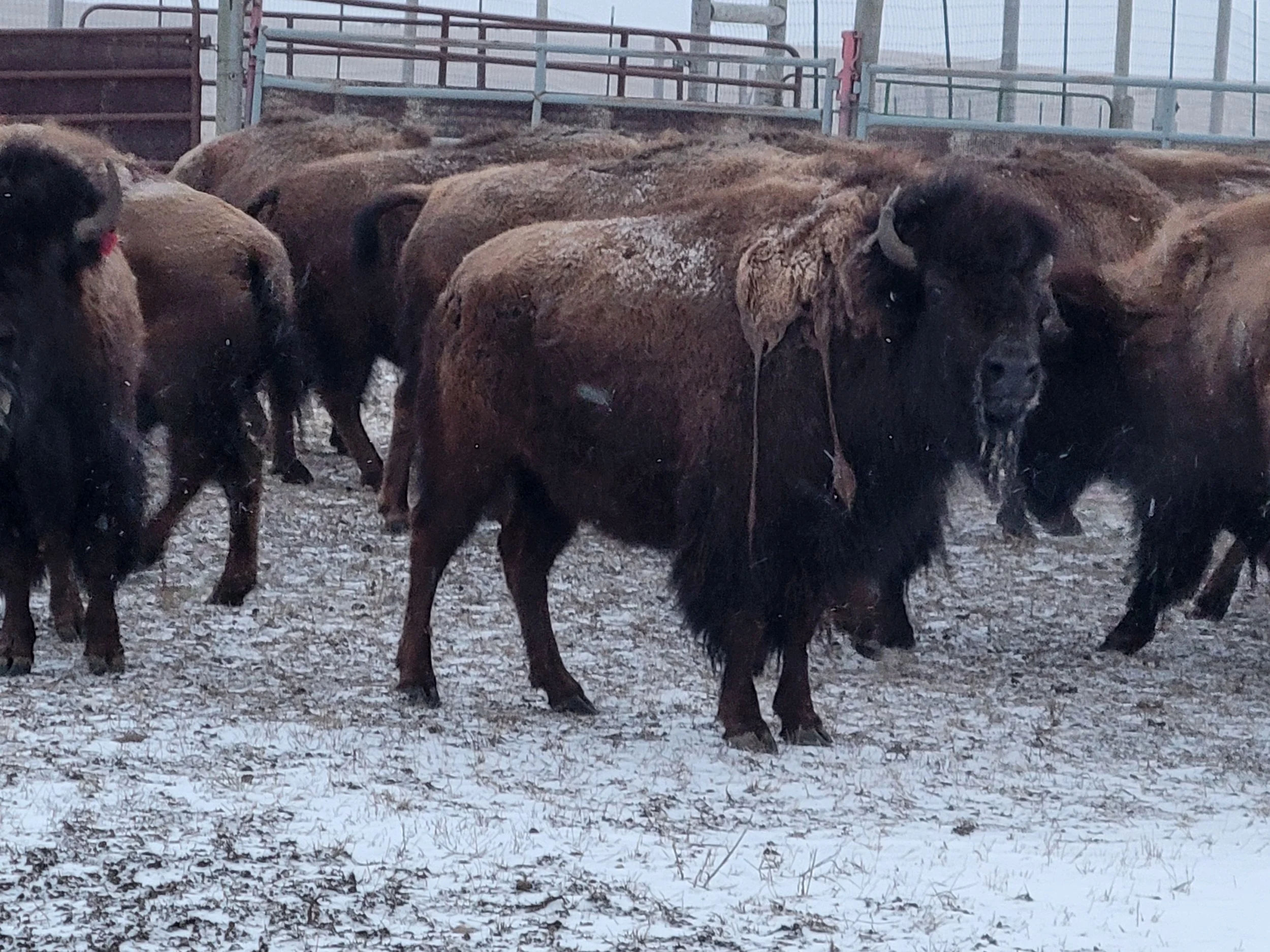
This year marked the largest transfer yet: 211 bison moved to the Fort Peck Indian Reservation over three operations. I traveled with one group—67 cows and calves, and two bulls—following the convoy on their long journey from Yellowstone to northeastern Montana.
The farther we drove, the colder and more restless the weather became. Winds picked up, temperatures dropped, and at one point we pulled over to deal with a flat tire—fixed with surprising speed, like a pit crew handling precious cargo. Through it all, the bison remained steady, quiet, resilient.
We reached Fort Peck just before sunset.
There was a feeling in the air—something heavier than the cold. This was a homecoming.
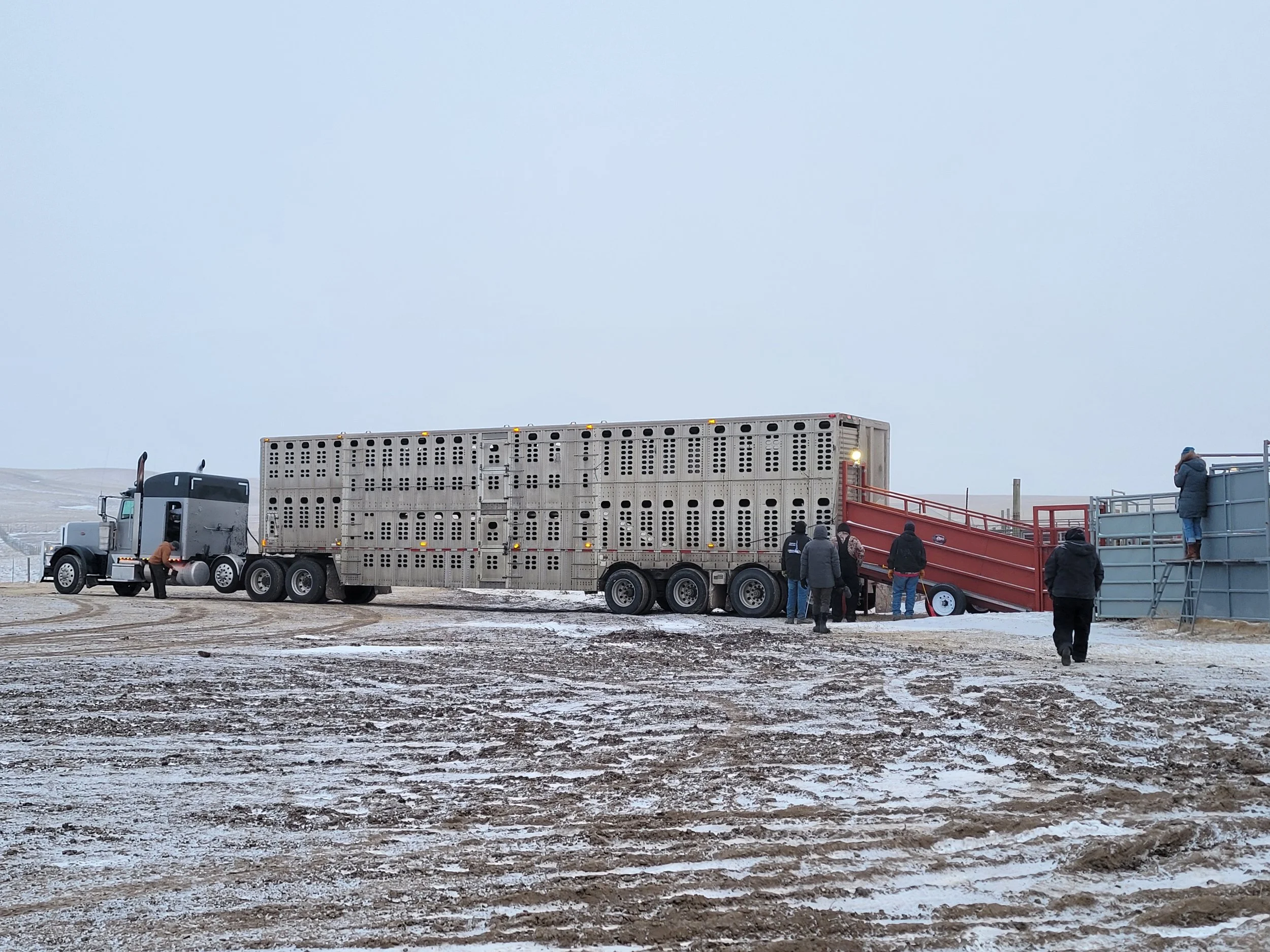
As the trailers opened and the bison stepped out onto their ancestral lands, members of the Fort Peck Tribes’ P’te Group were there to welcome them. A fire crackled nearby, offering warmth against the sharp evening air. People gathered close, watching, honoring the moment. When the last bison had safely unloaded, we shared a meal together—chicken and wild rice soup, green chili pork stew, cornbread, and fry bread—food that felt as grounding and meaningful as the day itself.
The next morning, we returned to Fort Peck.
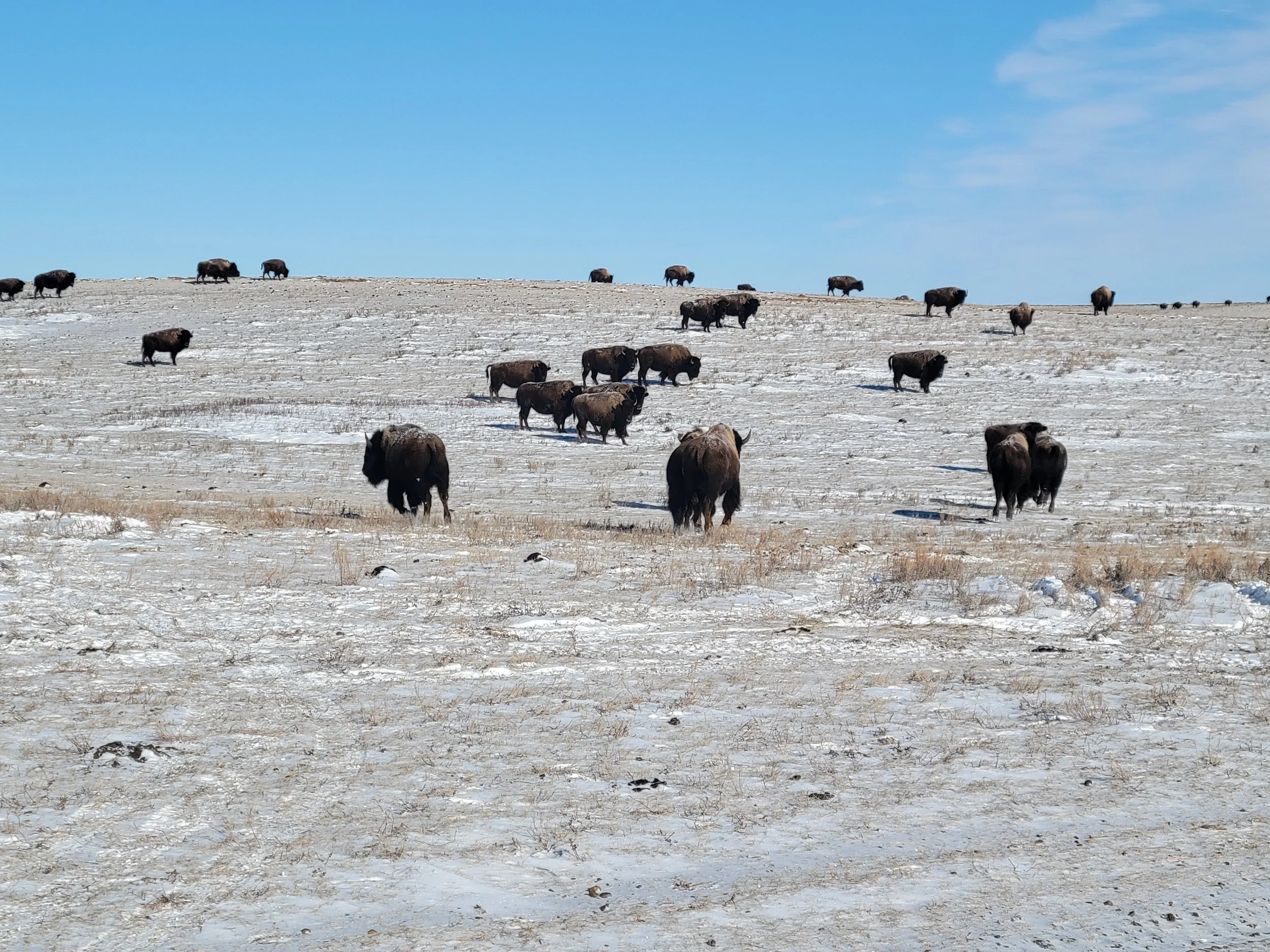
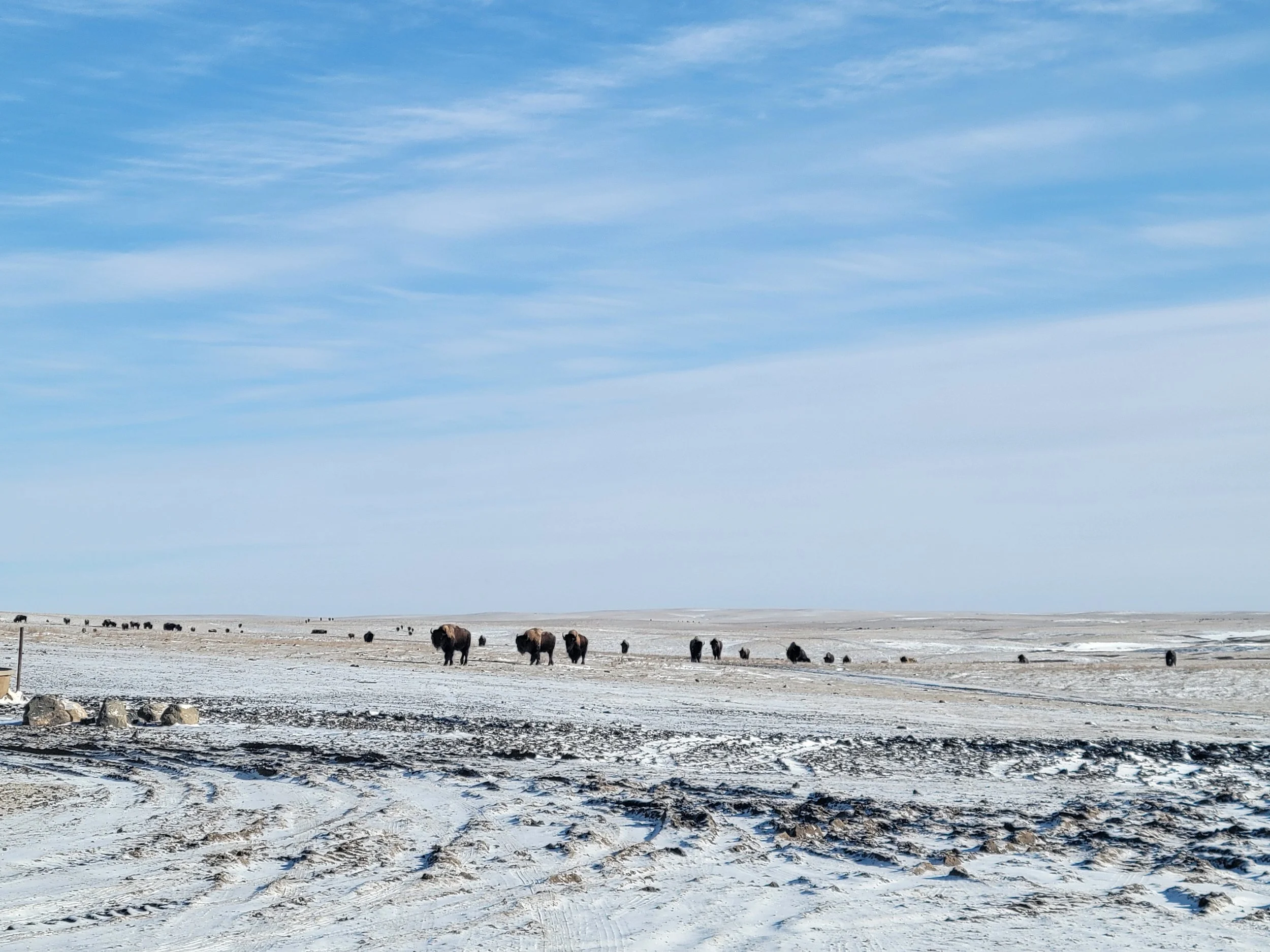
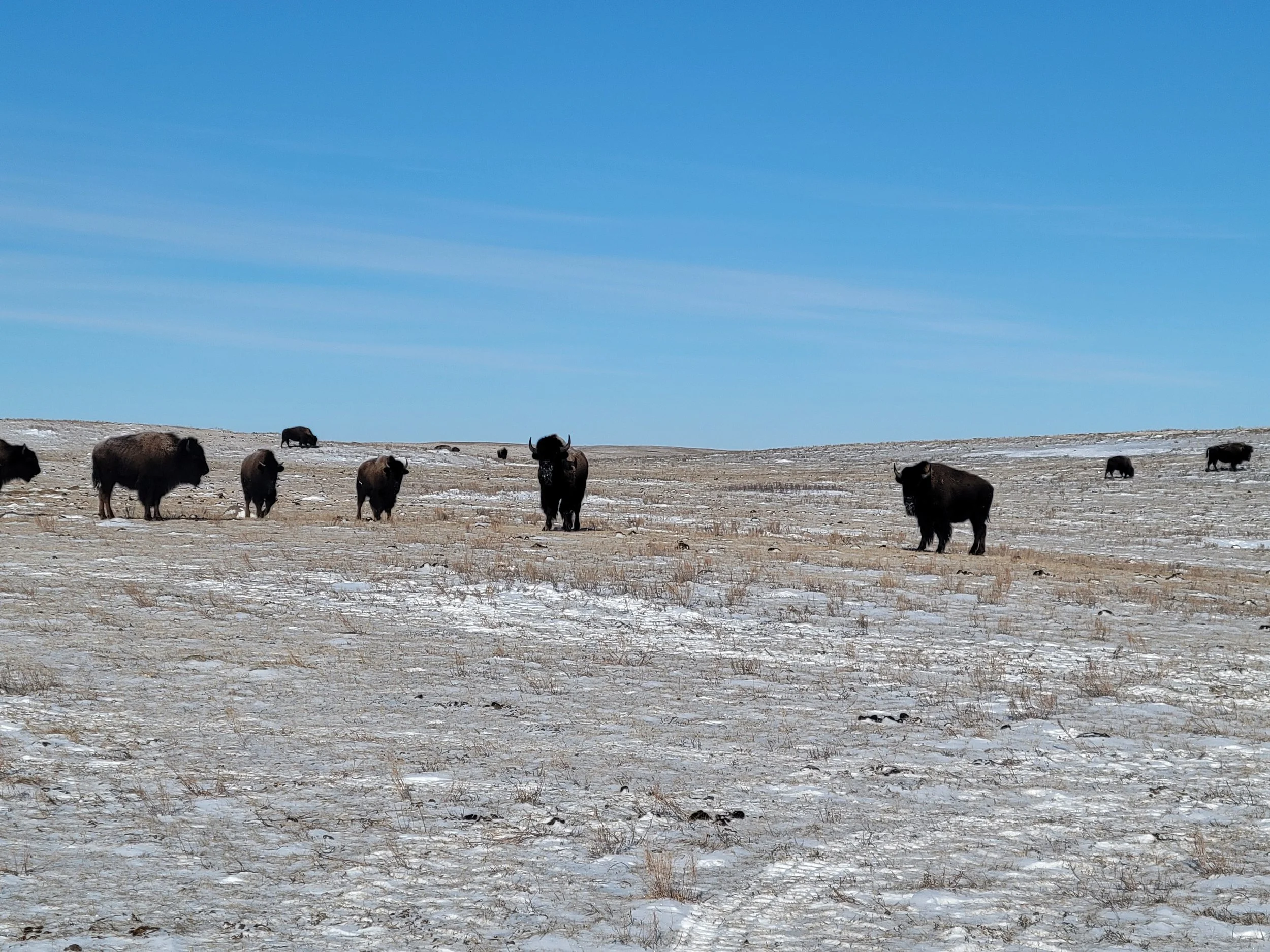
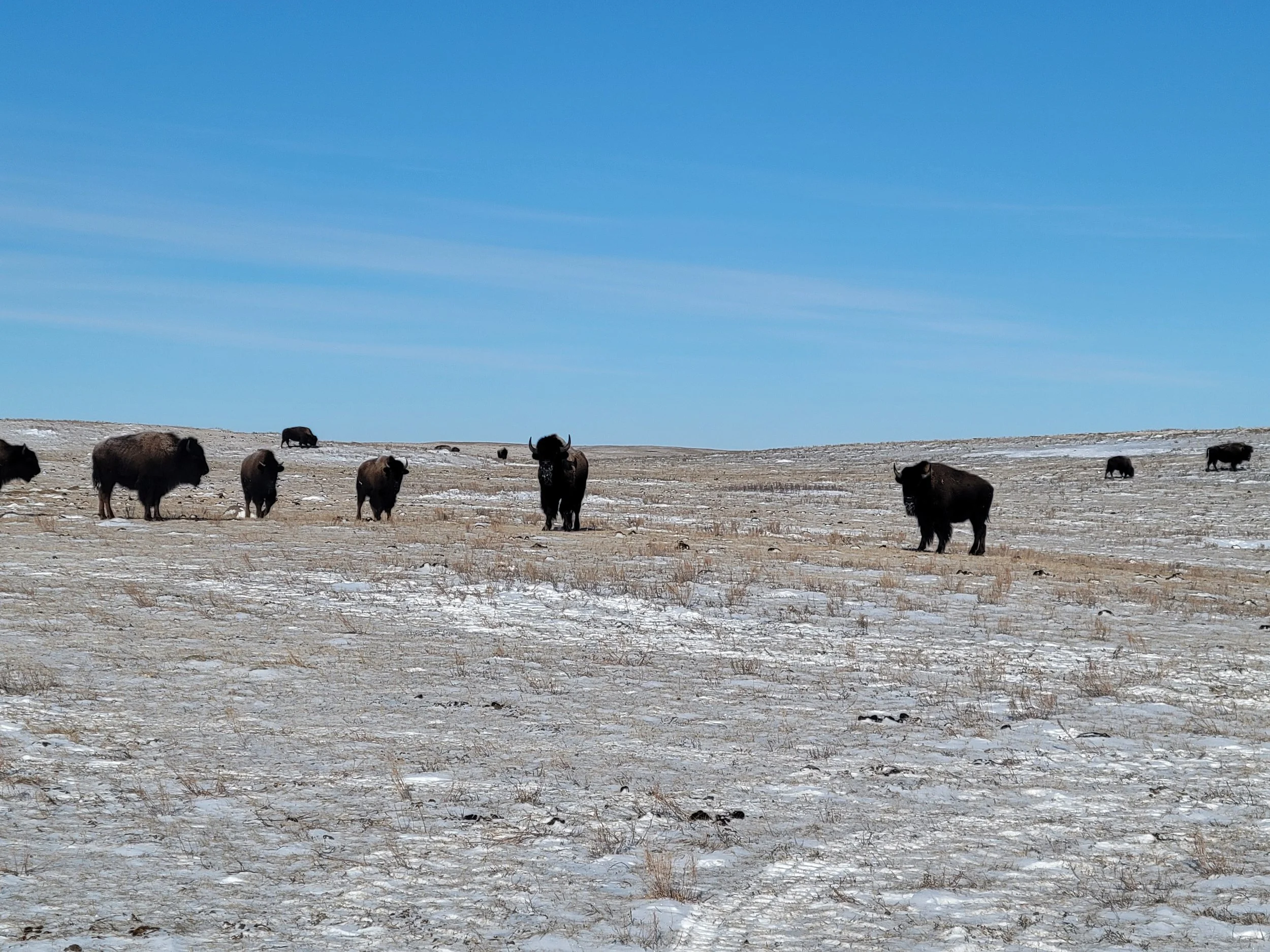
The bison stood quietly in their new home, beginning a secondary quarantine period before eventually being shared with other tribal nations across the country. Not far away, the Fort Peck cultural herd moved across more than 33,000 acres of grassland—a powerful reminder of what effective restoration can look like.
This wasn’t just a transfer of animals. It was the continuation of a story—one of resilience, reconnection, and return.
And I felt incredibly lucky to witness even a small part of it.
— Karrie Kahle, PCEC Conservation Director
Follow the Fort Peck Tribes’ P’te Group on Facebook and see more photos.