Action Alert: Help Us Defend The Roadless Rule
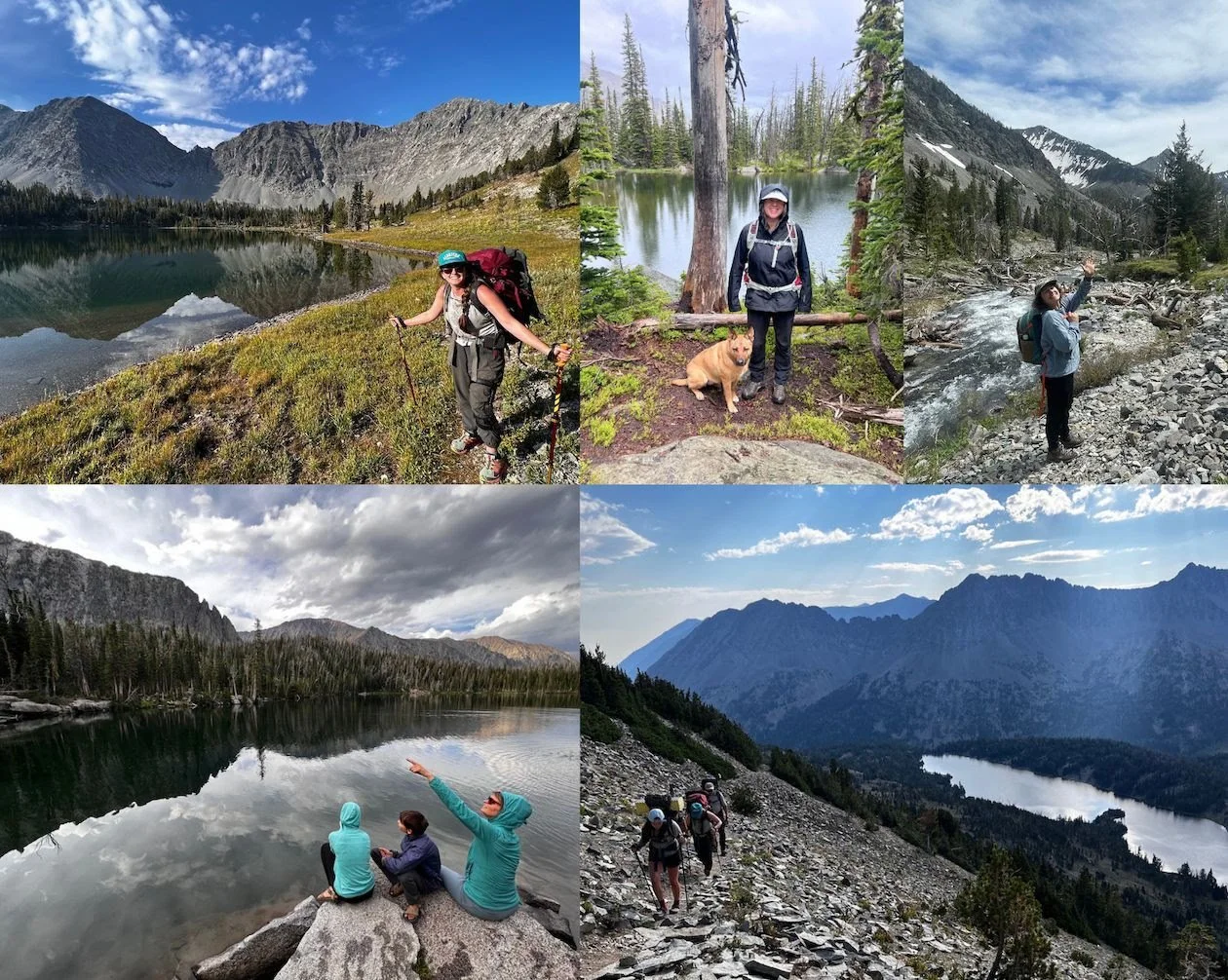
PCEC staff recreating near Campfire Lake, Sunlight Lake, Blue Lake, and Cottonwood Lake—areas at risk by the proposed repeal of the Roadless Rule.
At PCEC, protecting wild public lands and the clean headwaters of the Yellowstone River is always a top priority.
Across Park County’s one million acres of public land, more than half of the acreage outside of designated wilderness is protected by the Roadless Rule—including all public lands in the Crazies, along with wild areas in the Gallatins and Absarokas. Without the Roadless Rule, hundreds of thousands of acres of public land in our county would lose their primary protection against industrial development.
What Is The Roadless Rule?
A landmark conservation policy, the 2001 Roadless Area Conservation Rule, or “Roadless Rule,” protects 58 million acres of undeveloped national forest lands nationwide from new road building, industrial logging, mining, and energy development.
In Montana, the Roadless Rule protects around 6 million acres of public land, including over 850,000 acres of the Custer Gallatin National Forest—a large percentage of it right here in Park County. The policy was designed to preserve the wild, natural character of these places by protecting headwaters, wildlife habitat and supporting outdoor recreation—while allowing reasonable exceptions for temporary access roads when essential for forest management.
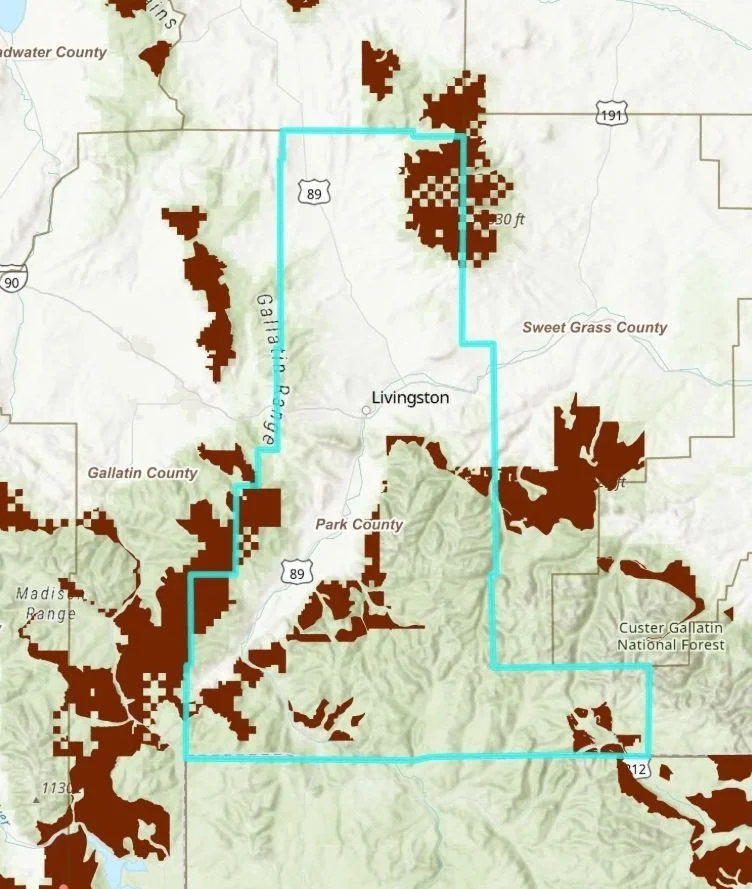
Areas protected by the Roadless Rule in and adjacent to Park County shown in brown.
The Threat to Park County's Public Lands
The U.S. Department of Agriculture announced a proposal to fully rescind the Roadless Rule. This move strips long-standing protections for national forest lands across the nation and it hits with particular poignancy right here in Park County.
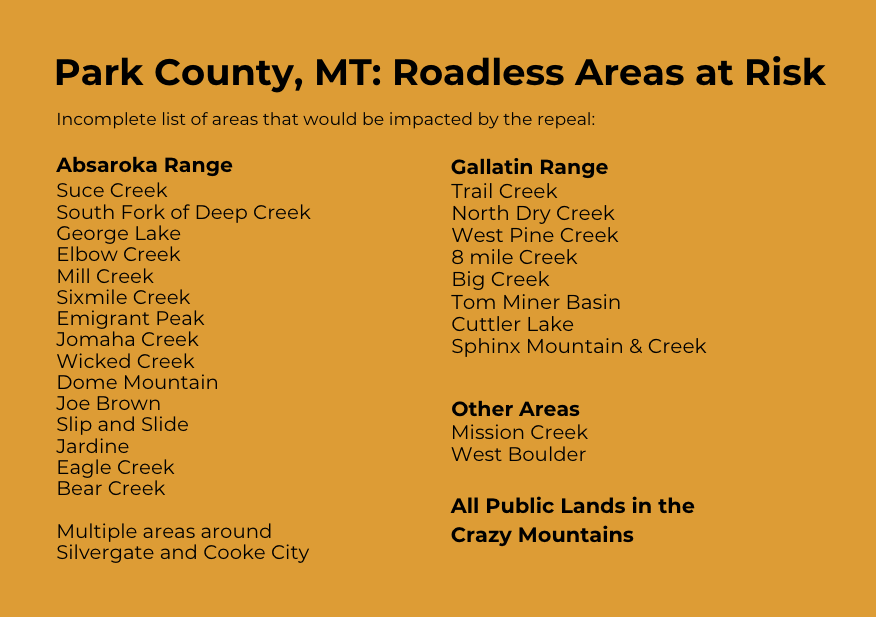
Without these protections, several areas within Park County would be vulnerable to development.
Crazy Mountains: The Crazies are particularly vulnerable. Given the checkerboard pattern of private inholdings within the national forest, repealing the Roadless Rule could result in new road construction into private parcels—facilitating logging, mining, and development that would permanently alter the range’s quiet, wild character.
Absarokas: The wild lands bordering the Absaroka-Beartooth Wilderness, like Mill Creek, Suce Creek, and the areas surrounding Cooke City, Jardine, and the Northern Boulder River, provide critical refugia for wildlife.
Gallatins: Areas like the Hyalite-Porcupine-Buffalo Horn Wilderness Study Area, and the nearby Bridger and Madison ranges rely on the Roadless Rule to protect clean water, wildlife migration corridors, and quiet backcountry recreation.
Why We Are Concerned
With our climate changing, these wild places are more important than ever. In Montana, 93% of elk summer range and 79% of native trout habitat are found within roadless areas. Keeping these lands intact provides secure habitat for species like grizzly bears, wolves, and Yellowstone cutthroat trout, while protecting vital migration corridors for big game.
The USDA claims that the repeal of the Roadless Rule is necessary for wildfire management and forest health. The facts show otherwise:
Building new roads deeper into our forests increases ignition risks. 85% of wildfires are human-caused, and 78% start within a half-mile of a road.
The 2001 Roadless Rule already has built-in flexibility for hazardous fuels reduction and emergency access. Nearly 190,000 acres of fuels treatments have taken place in Montana roadless areas under the current rule.
The Forest Service already faces an $8.6 billion maintenance backlog on existing roads. We should care for the roads we have before spending public resources to carve new roads into intact backcountry.
Source: Roadless Rule MT
We are seeing shifts and disruptions to public land protections across the country, and the USDA’s proposal to fully rescind the Roadless Rule represents one of the most significant threats to Park County’s public lands we have faced yet. We need your voice to demonstrate that roadless, wild lands are essential to our community, our local economy, and the resilience of our entire ecosystem.
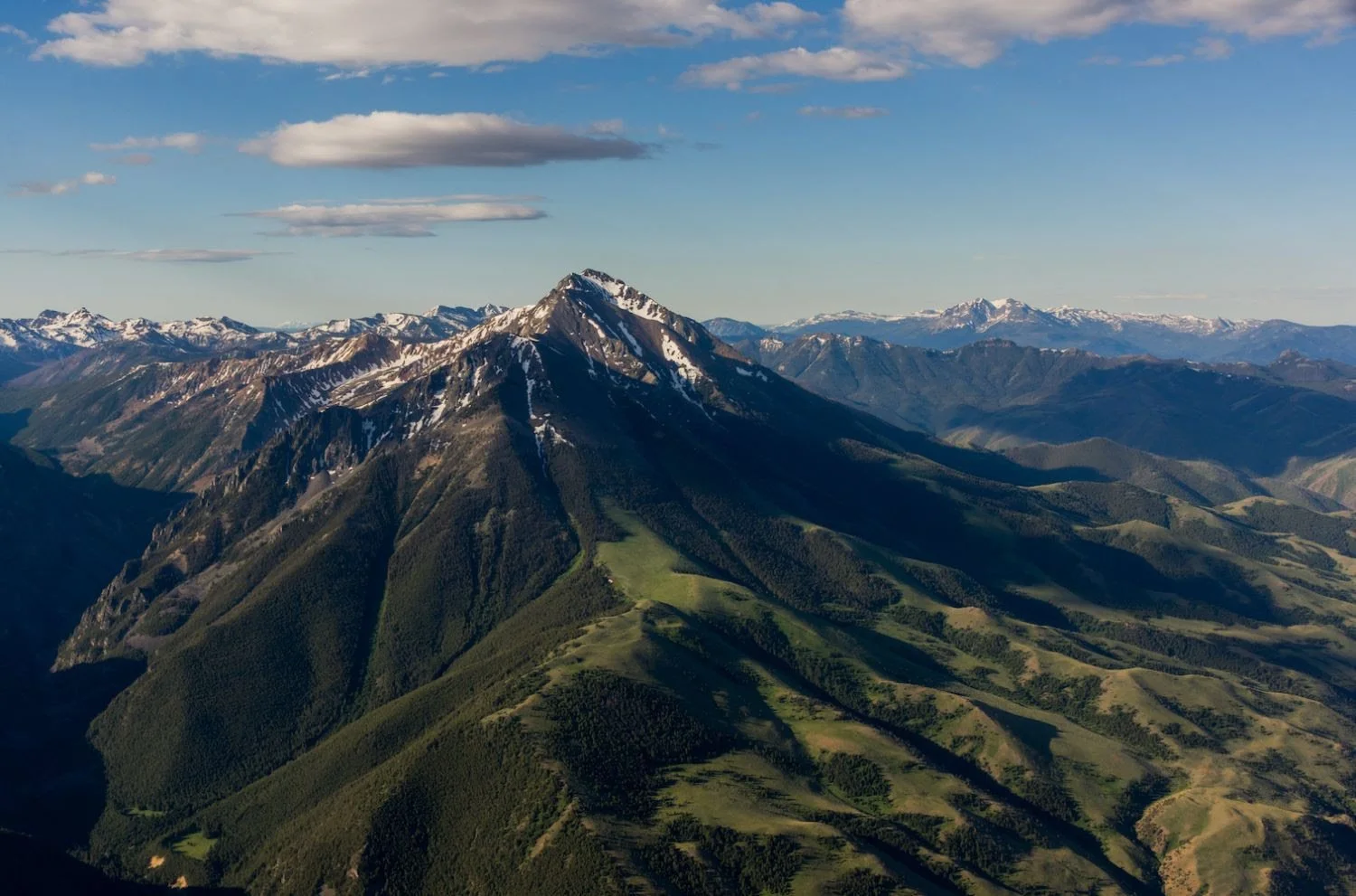
Emigrant Peak—an area at risk with the proposed repeal of the Roadless Rule—Photo Courtesy of EcoFlight
Take Action Today: How to Write Your Comment
In the Forest Service proposal, PCEC is supporting Alternative 1 (No Action), which leaves the 2001 Roadless Rule fully intact.
When submitting your public comments to the Forest Service, be respectful, clear and direct about what outcome protects our public lands and why these places are so important to you.
Submit your official comment directly on the USFS Roadless Areas Web Page.
Explicitly state that you live in Park County and ask the USDA to select Alternative 1 (No Action) to keep the 2001 Roadless Rule intact.
Share a brief memory or mention a specific roadless area in Park County that matters to you (for example Big Creek, Cottonwood Lake, Passage Falls, Blue Lake).
Include 1-2 key talking points in your comment.
Want Support Writing a Comment?
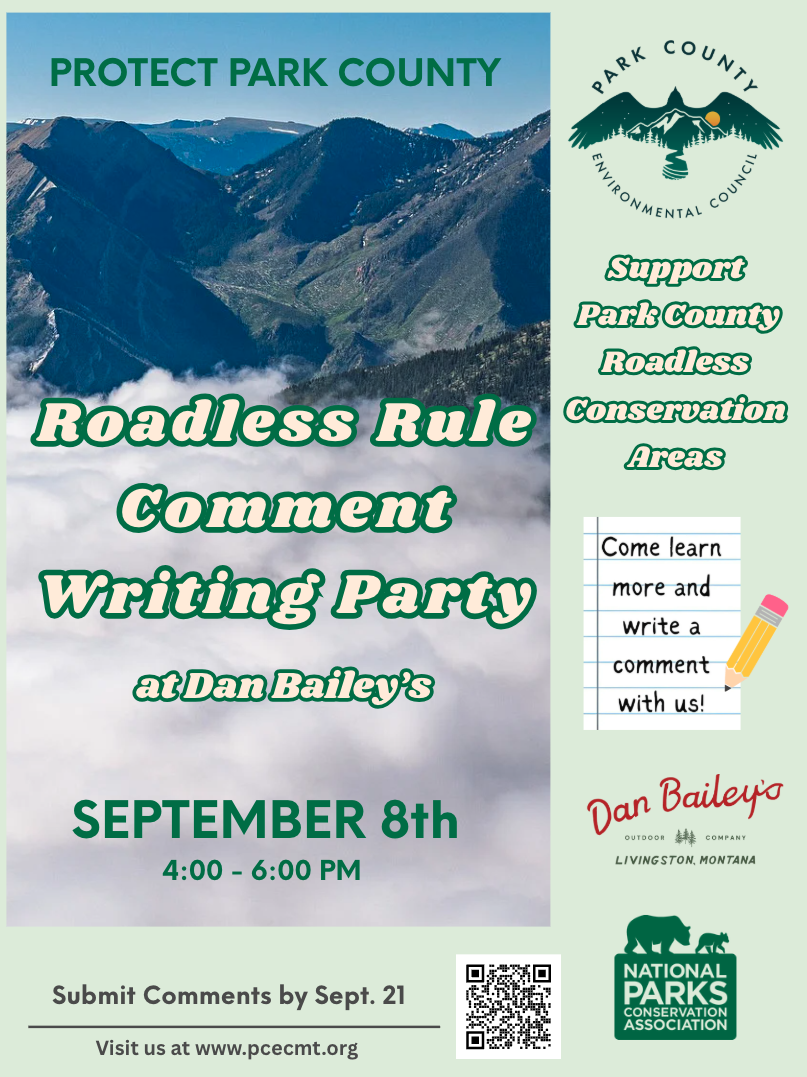
Join us at our Roadless Rule Comment Writing Party on September 8th from 4-6PM at Dan Bailey’s Outdoor Co. Refreshments will be provided and we will help community members navigate the comment writing process.
Additional Ways to Learn About the Roadless Rule and Get Involved
Check out the Facts and Sources page at Roadless Rule MT and join the Montana-based initiative to defend the Roadless Rule: www.roadlessrulemt.org.
Listen to this Montana Public Radio Podcast Episode: Roadless Rule to learn what the Roadless Rule is and what it means for our public lands.
Find the roadless area in Park County that is most important to you on this interactive map.
Share your story with us: PCEC wants to know how you connect with this landscape and why these threatened places matter to you. Come by the office, pull us aside at the farmers market, join us for a comment writing party, send us an email, or drop a message on social media. Share a poem, an image, a memory, a piece of art or a simple thought on why roadless areas are worth protecting.
Let’s make sure our collective voice is what shapes the next chapter of these lands.