
Warm temps continue in February!
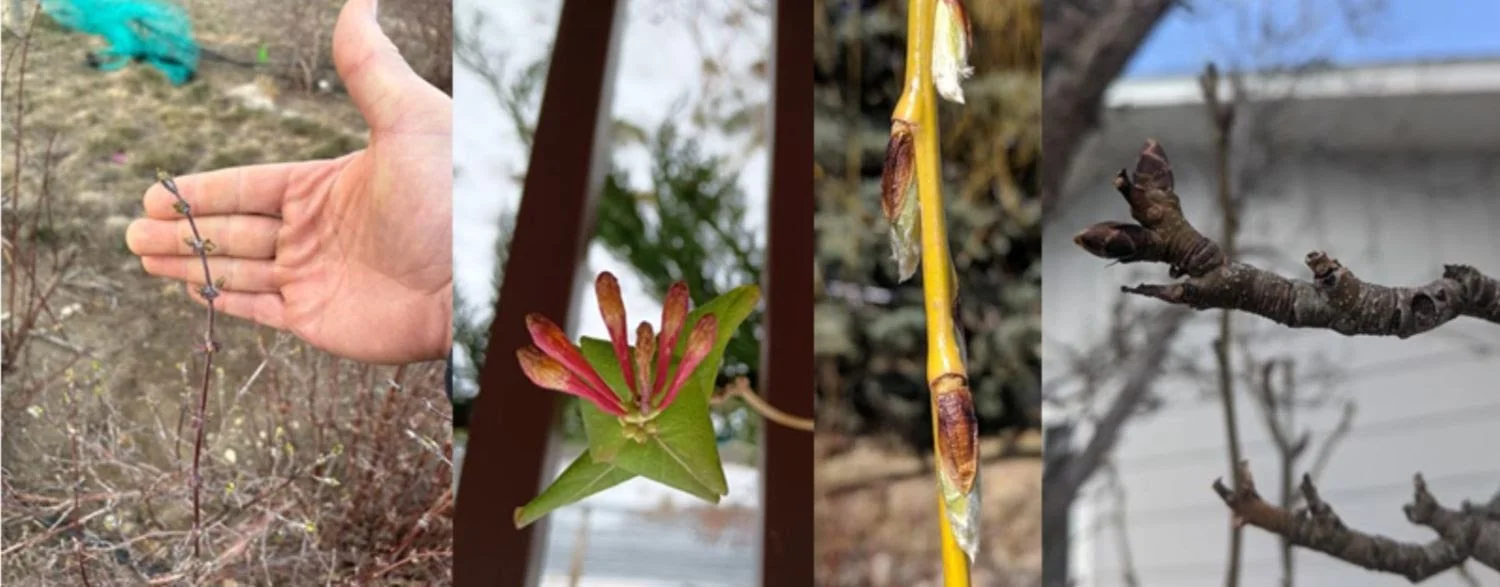
Image from MSU Extension Urban Alert: "Plants showing various accelerated stages of bud growth and development across Montana. From left to right: Haskap showing bud break near shoot tips (Bitterroot, Zach Miller), ornamental honeysuckle flowers and leaves showing frost damage from December (Gallatin Valley, Abi Saeed), willow and ornamental pear buds swelling in Jan. and Feb (Gallatin Valley, Sarah Eilers).”
We are reaching out again, because, as you’ve likely noticed, our Montana winter still looks a lot more like spring. These unseasonably warm temperatures can be confusing for our newly adopted trees and we want to make sure your trees stay healthy and hydrated through these temperature swings.
With temperatures reaching up to 60°F this week, we need to water our trees!
Watering tips to protect your trees from winter drought injuries:
Water your tree when air temperatures are above 40°F and there is no snow cover.
Give your tree a big drink of water: about 20 - 40 gallons or 10 gallons per 1 inch of trunk diameter.
Watering should occur midday to allow time for the water to soak in before potential freezing temperatures.
Water your tree about once or twice a month during extended warm, dry periods without snow cover.
Warm winter weather is also making pruning decisions tricky. We are still hoping to co-host a hands-on pruning course with MSU Extension this March—and crossing our fingers for a cold snap to keep the trees dormant enough for it! In the meantime, we are passing along critical pruning tips from a recent MSU Extension Urban Alert.
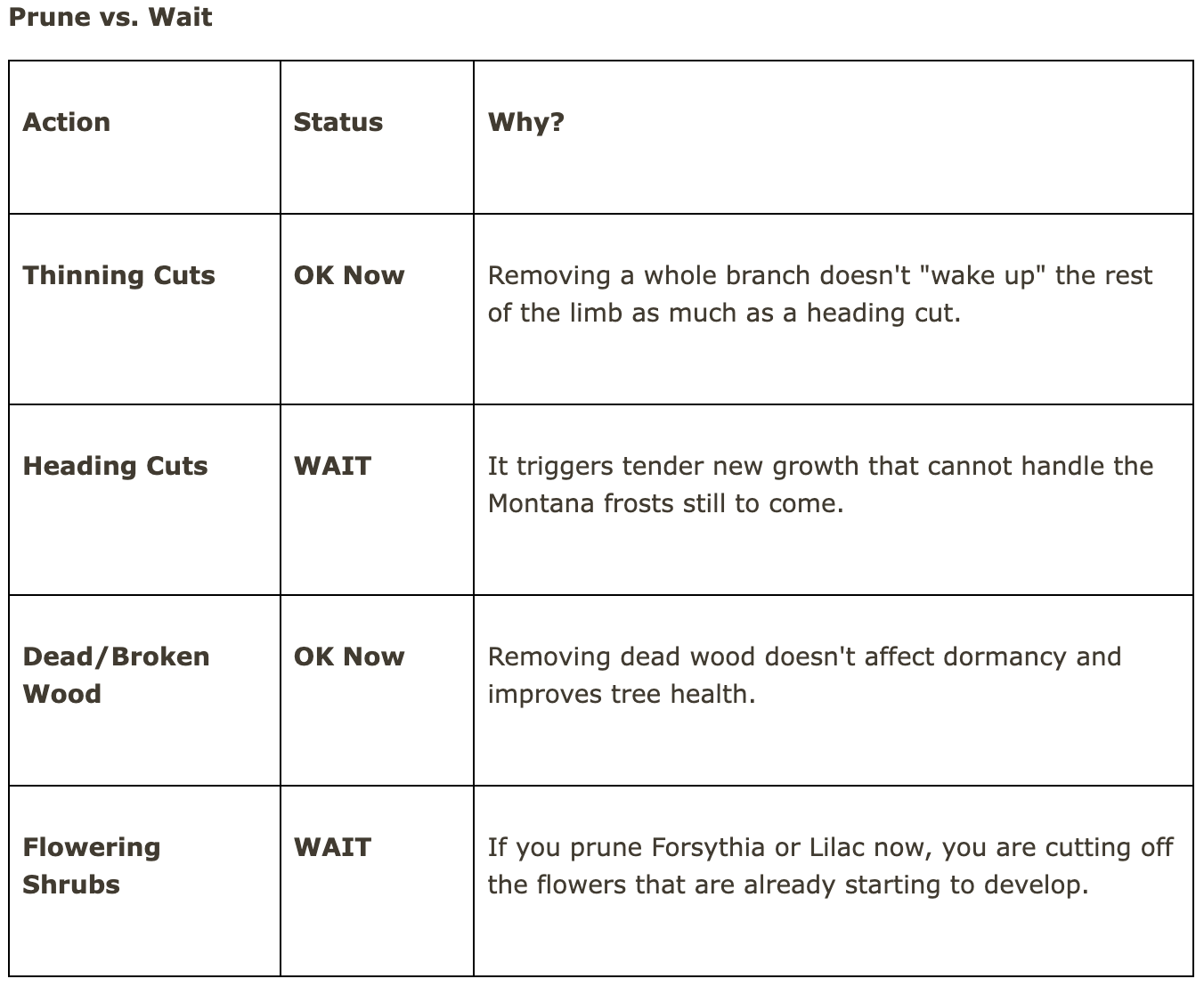
To Prune or Not to Prune?
What is safe to PRUNE (Thinning Cuts): Thinning cuts are generally safe during this warm window. A thinning cut removes an entire branch back to its point of origin (the trunk in the case of smaller trees, or a larger limb).
Target: Dead, damaged, or poorly placed branches.
The "Weather Window" Rule: Only prune when temperatures are between 40°F – 60°F.
The 5-Day Forecast: Ideally, do this at least 2–5 days before a predicted freeze (below 25°F). This gives the tree a tiny head start on "compartmentalizing" (sealing) the wound.

What to DELAY (Heading Cuts): It’s strongly advised to wait a few more weeks (into late March or April) for heading cuts. A heading cut is when you "top" or shorten a branch by cutting it in the middle of a stem.
The Risk: Cutting the tip of a branch sends a chemical signal to the buds lower down to "wake up." If you do this in February and a cold snap hits (which it will), those newly awakened buds will likely freeze and die.
Species to watch: If you have Honeysuckle, Forsythia, Maples, Aspens, or Currants showing "bud swell" (fat, fuzzy, or greening buds), avoid heading cuts right now.
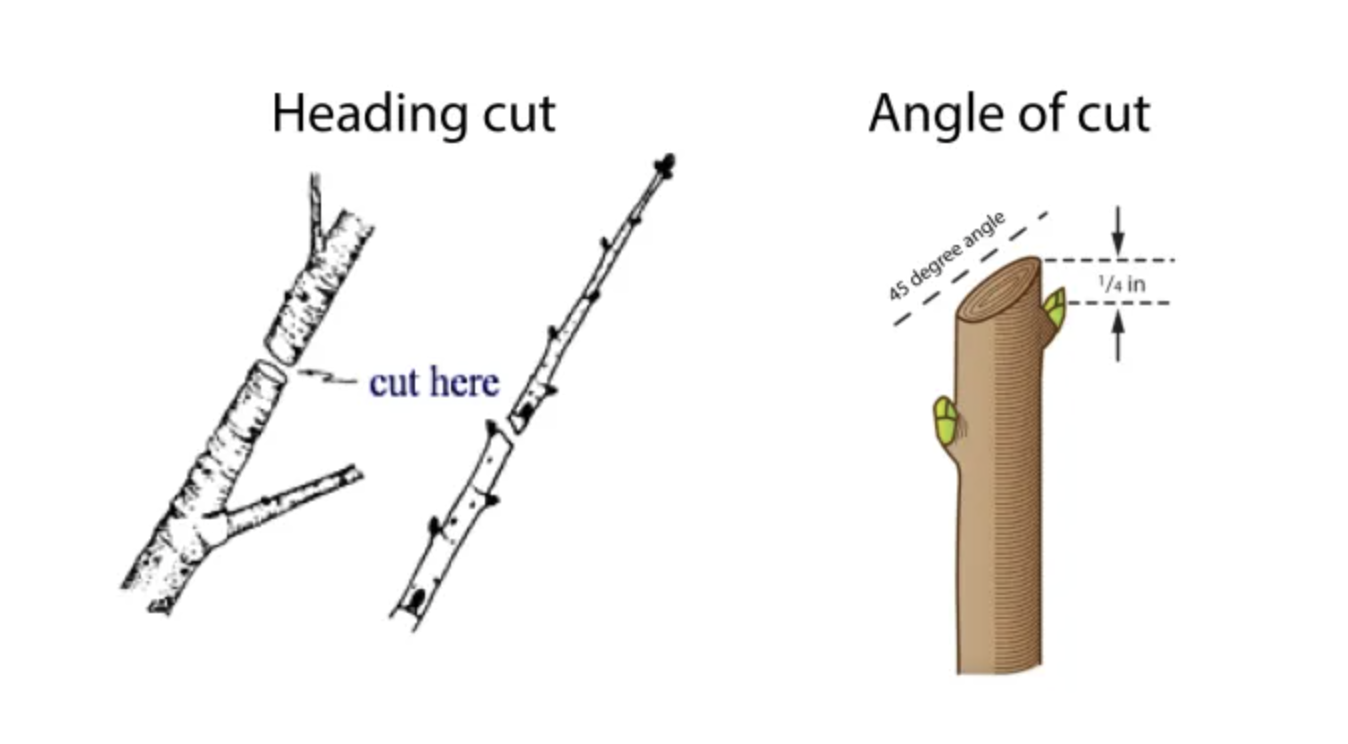
Image from UC Marin Master Gardeners
With this warm winter weather, prune cautiously. Delay heading cuts and use thinning cuts only when conditions are favorable. If you’re unsure, it’s okay not to prune. Pruning isn’t mandatory unless it’s needed for structure, safety, or production. To learn more about pruning best practices consult our Livingston Loves Trees: Volunteer Pruning Handbook.
Try to water your trees once a month during warm spells. Keep an eye on the forecast to monitor weather conditions throughout the winter. Let us know if you have any additional questions on how to best take care of your trees.
Additional Resources:
You can sign up for MSU Extension Alerts, read about evergreens specifically, Master Gardener Spotlight: Watering Evergreens for Winter and learn more from Colorado State Extension
Fall and Winter Watering of Plants and Trees.
Winter Watering Trees and Shrubs - MSU Extension Alert
Visit our Livingston Loves Trees Resource Library for more guides and tips on tree maintenance.
If you want someone to come look at your tree, please send me an email and we can send a tree nurse to speak with you, or call the numbers above.
In addition, if you have any physical samples of insect or disease, they can be brought to the MSU Extension office in Park county - they offer free diagnostics through our partner lab on campus - thank you Jackie!
There are many more MT specific resources here at MUCFA's site, and especially interesting is the trees in the Wildland Urban Interface WUI.
Help Grow the Livingston's Urban Forest
We are gearing up for the 2026 planting season in May. You can help by signing up to adopt a tree, donating to the tree fund, or signing up to volunteer. Learn more about Livingston Loves Trees program here.
1. Apply to Adopt a Tree
If you have an empty spot on your boulevard or in a public space near your home, PCEC will plant a large, high-quality deciduous tree for you for free—a $750 value to purchase, dig, plant, and secure.
Your Commitment: You must agree to follow a watering schedule and care for the tree. This cost share helps keep our trees free!
Coordinate with Tree Team: work with volunteers on a planting location, date, and the City permit process.
Eligibility: Must reside in the City of Livingston with adequate space for a tree.
2. Donate to the Tree Fund "Plant it Forward"
Help us fund the next 50 trees!
Tree Partner – $50-$100: Help grow our tree fund and increase education and outreach.
Tree Supporter – $250: Purchases a large diameter 1.5-2" tree ($250-$350).
Tree Sponsor – $500: Purchase a large ball-and-burlap tree, City tree permit application and planting costs.
Plant It Forward – $750: All of the above including volunteer and program coordination.
Legacy Tree Steward – $1,000: All of the above including long-term health monitoring, reporting, inventory data collection and adaptive care for five years.
Since 2021, Livingston Loves Trees has been working to improve the equity and resiliency of our local canopy. Our goal is ambitious, to plant 1,000 trees and have planted 381 so far. Currently, nearly half of Livingston’s 4,000 public trees are ash. With the emerald ash borer threatening ash trees across the country, it is vital that we diversify our forest now with hardy maples, oaks, elms, and more.
